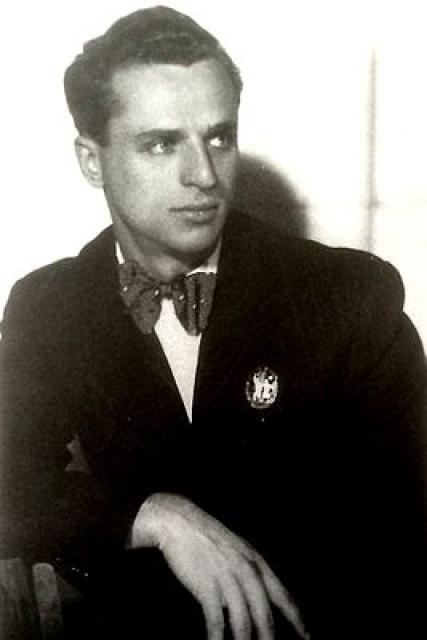
Semen Kaplan
- Early Life and Education
- Ballet Career
- Recognition and Accomplishments
- Teaching and Legacy
- Personal Life and Legacy
Early Life and Education
Semen Kaplan was born on an unspecified date into a prominent theatrical family in Saint Petersburg, Russia. His father, Shlema Zelmovich Kaplan, was a renowned tailor whose clientele included legendary opera singer Fyodor Chaliapin. Inspired by Chaliapin's advice, Kaplan's father enrolled him in the Leningrad Choreographic Technical School in 1921.
Throughout his training, Kaplan studied under esteemed teachers such as A. Petrov, L. Leontiev, and Vladimir Ponomarev. Ponomarev, who would become a significant mentor, taught Kaplan in his final four years of study and fostered a close artistic partnership that spanned 16 years.
Ballet Career
In 1930, Kaplan graduated from the technical school and joined the Leningrad Theater of Opera and Ballet. He shared his graduation class with Konstantin Sergeev and, a year prior, with Vahtang Chabukiani. All three would become leading dancers of the Leningrad ballet scene.
Beginning with minor roles as "fours" in various productions, Kaplan quickly rose to prominence as a soloist due to his exceptional physicality. His soaring jumps with suspended "hangs," impressive physique, and unwavering stamina captivated audiences. He partnered with renowned ballerinas, including Elena Lykum, Natalia Dudinskaya, and Galina Ulanova. His collaborations with maestros such as Chabukiani, Sergeev, and Fyodor Lopukhov further enhanced his artistic development.
In 1940, Kaplan authored the libretto for V. Soloviev-Sedov's ballet "Taras Bulba" (later revised in 1955).
Recognition and Accomplishments
Throughout his career, Kaplan received numerous accolades. In 1940, he was awarded the Order of the Badge of Honor. During World War II, he evacuated to Molotov (now Perm) with the Kirov Theater from 1941 to 1944. He continued performing lead roles in iconic ballets such as "Swan Lake" and "Don Quixote."
In 1947, Kaplan was honored with the title of Meritorious Artist of the RSFSR. Two years later, he received the prestigious Stalin Prize, Second Class, for his portrayal of Abderakhman in "Raymonda."
Teaching and Legacy
While still an active performer, Kaplan began teaching at the Leningrad Choreographic School in 1936. He taught intermediate and advanced classes, specializing in duet dance. His notable students included Oleg Sokolov, Sergei Vikulov, and Valery Panov. He also mentored international dancers from Vietnam, Cuba, Germany, Finland, and Bulgaria.
In the late 1940s, Kaplan compiled a manuscript on V. I. Ponomarev's classical dance teaching methods. Although initially unpublished, it later formed the foundation for a monograph published in 2004.
From 1959 to 1978, Kaplan served as a ballet répétiteur at the Leningrad Maly Theater of Opera and Ballet and the Kirov Theater of Opera and Ballet. In 1975, he staged Sergei Prokofiev's "Romeo and Juliet" at the Kirov Theater, based on Leonid Lavrovsky's choreography.
Personal Life and Legacy
Semen Kaplan passed away on January 21, 1983, at his dacha in the village of Komarovo. He was buried in the Kineevskoe Cemetery in Leningrad.
Kaplan's legacy lives on through his students and the impact he had on the art form. His exceptional technique, charismatic presence, and mentorship continue to inspire generations of dancers.


