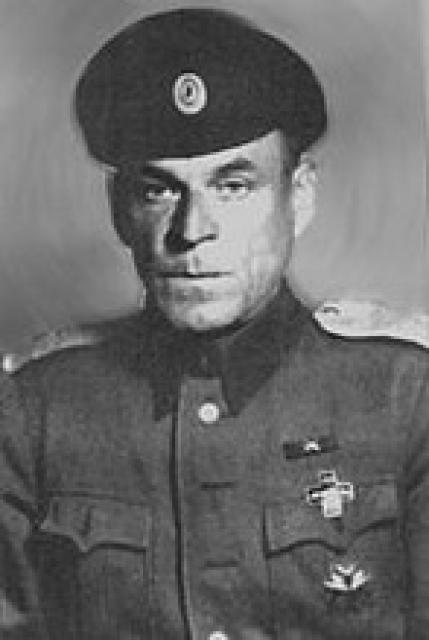
Semen Krasnov
- The Life and Legacy of Semyon Nikolaevich Krasnov
- Post-Revolution and Exile
- Collaboration with Germany
- Post-War Capture and Execution
- Personal Life
- Rehabilitation Denial
- Legacy
The Life and Legacy of Semyon Nikolaevich Krasnov
Early Life and Military ServiceSemyon Nikolaevich Krasnov was born into a military family in Russia. He graduated from the Nikolaev Cavalry School in 1911 and served as an officer in the Life Guards Cossack Regiment. During World War I, he rose to the rank of Assistant Commander of the Regiment.
Post-Revolution and Exile
After the October Revolution of 1917, Krasnov returned to the Don region and participated in the anti-Bolshevik White Army. In 1920, he went into exile in Yugoslavia and France.
Collaboration with Germany
During World War II, Krasnov traveled to Berlin and worked with his cousin, Pyotr Krasnov, to collaborate with Nazi Germany. He became Chief of Staff of the Main Directorate of Cossack Troops within the German Ministry for the Eastern Occupied Territories.
Post-War Capture and Execution
In May 1945, Krasnov surrendered to the British. Along with thousands of Cossack officers, he was extradited to the Soviet authorities. He was sentenced to death for espionage, subversion, and armed resistance against the USSR and was executed in Moscow in 1947.
Personal Life
Krasnov was married twice. His son, Mikhail Krasnov, was born in a displaced persons camp in Austria.
Rehabilitation Denial
In 1997, the Russian Supreme Court ruled that Krasnov and other collaborators were not eligible for rehabilitation.
Legacy
Semyon Nikolaevich Krasnov remains a controversial figure in Russian history. His actions during World War II have been condemned by many, while others view him as a flawed but patriotic military man who made difficult choices in a time of war.