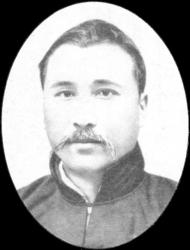
Semen Pahman
 Russia
- Early Life and Education
- Academic Career
- Later Career and Contributions
- Pakhman was a prolific legal scholar, and his major works include:
- Legacy
Early Life and Education
Semyon Vikentyevich Pakhman was born in Odessa, Russia, in 1825. He received his initial education at the Richelieu Lyceum in Odessa and later studied law at Moscow University.
Academic Career
After graduating, Pakhman taught law at the Tula Gymnasium and later became a professor of encyclopedia and legal history at the Richelieu Lyceum. In 1852, he was appointed to the chair of laws of state administration and legal history at Kazan University.
In 1859, Pakhman moved to the University of Kharkov, where he taught laws of administration and civil law. In 1866, he was invited to the St. Petersburg University to become a professor of civil law and legal proceedings, a position he held until 1876.
Later Career and Contributions
After leaving St. Petersburg University, Pakhman taught civil law at the Alexander Lyceum and the School of Law. In 1882, he was appointed a senator and worked on the commission drafting a Russian civil code.
Pakhman was a prolific legal scholar, and his major works include:
- "On Judicial Evidence in Ancient Russian Law" (1851)- "History of Civil Law Codification" (1876)
- "Customary Civil Law of Russia" (1877, 1879)
- "On the Contemporary Movement in the Science of Law" (1882)
- "On the Subject and System of Russian Civil Code" (1884)
Legal Philosophy
Pakhman was a proponent of formalistic legal theory, emphasizing the logical structure of law rather than its historical or sociological context. He argued that civil law was a closed system of norms that should not be altered or adjusted to suit the changing needs of society.
Legacy
Pakhman's influence on Russian legal thought was significant. His work on customary law established a foundation for the study of Russian legal traditions. His writings on legal theory sparked debates and contributed to the development of jurisprudence in Russia.