
Serge Gainsbourg
 France
Biography of Serge Gainsbourg
Serge Gainsbourg was an extraordinary French poet, composer, author, and singer, as well as an actor and director. He was a versatile artist, but above all, he was a brilliant musician and a genius poet, with a unique ability to manipulate the French language. Gainsbourg was always surrounded by beautiful women, thanks to his incredible talent, charisma, and free-spirited nature. His most famous relationship was with actress Jane Birkin, who was his muse and the love of his life.
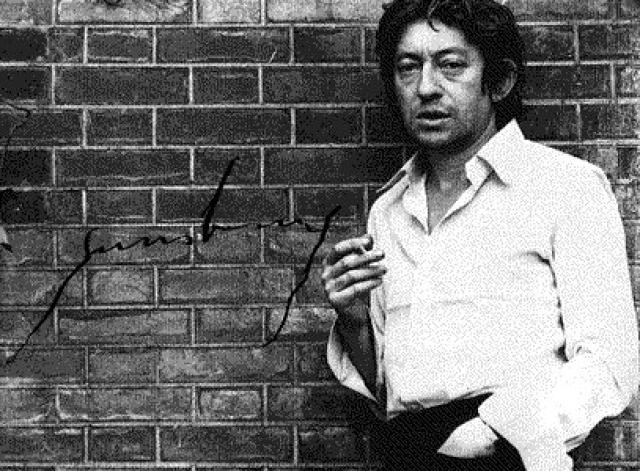
Lucien Ginsburg was born on April 2, 1928, in Paris, to Olga Bezman and Joseph Ginsburg, immigrants from Crimea and Kharkov. Lucien's parents met while studying at the St. Petersburg Conservatory. His mother was a singer, and his father was a composer and pianist. In 1919, the family moved to Constantinople and later relocated to Paris. During World War II, the Ginsburg family lived in the free zone. In 1945, they returned to Paris, and Lucien enrolled in the College Condorcet. However, he was expelled from the institution and began attending the School of Fine Arts. Lucien aspired to become a painter and create masterpieces comparable to Picasso or Goya. However, he soon discovered that he lacked talent in painting and did not find satisfaction in it. To earn some money, Lucien played the piano in cafes and bars, where he became acquainted with rock and jazz music. It was during this time that he started writing poetry and practicing singing. In 1958, he adopted the name Serge to emphasize his Russian origins, and he changed his last name to Gainsbourg in homage to the artist Giacometti. Serge decided to abandon painting altogether and focus on music. His father found him a gig as a pianist at the cabaret "Milord l'Huilier," where he struck up a partnership with singer Michèle Arnaud. It was at this venue that Gainsbourg met composer and writer Boris Vian, who would forever change his life. Vian's work, infused with cynical humor and sharp satire, awakened Gainsbourg's true passion for creative expression. He felt so liberated that he was not only willing to write but also perform his own songs. However, Gainsbourg's first album, "Du chant à la une!" (1958), did not gain much popularity. The unconventional style of his performances and the provocative themes of his songs, which praised misogyny, epicureanism, and cynicism, contributed to its lack of success. His live performances also failed to resonate with the audience. People were repelled not only by Gainsbourg's physical unattractiveness but also by his demeanor, which was free-spirited, egocentric, and somewhat disdainful. Over time, both Gainsbourg's attitude towards the public and the public's perception of him began to change.
Creative Experiments and Musical Styles
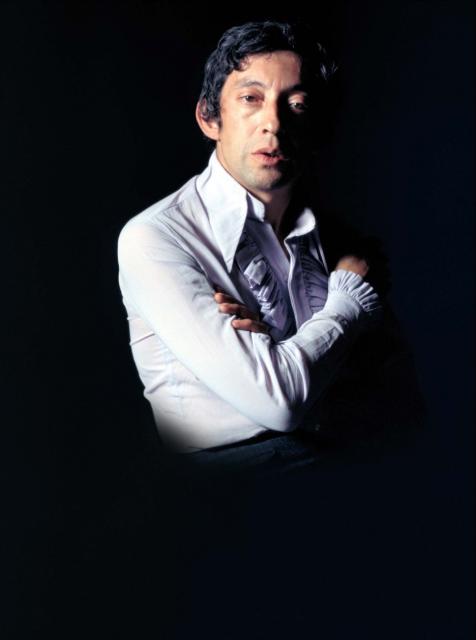
Gainsbourg's body of work was characterized by constant experimentation and the utilization of new musical styles. He began with jazz and classical chanson but later explored rock and roll, funk, reggae, and commercial music. He also incorporated themes from famous composers of the past, such as Chopin, Brahms, and Grieg, into his music. In 1965, Gainsbourg temporarily stopped performing live and spent the next 15 years writing poetry and songs for other artists. His songs were performed by Brigitte Bardot, Isabelle Adjani, Jane Birkin, Juliette Gréco, Françoise Hardy, and many others. Despite not appearing on stage, Gainsbourg continued to record his own albums, which gradually gained popularity and success. He was one of the first artists in France to create what is now known as conceptual albums. These albums differed from conventional ones in that they united songs that were thematically or narratively connected. For example, the main theme of the album "Histoire de Melody Nelson" (1971) revolved around the tragic love of a mature man for a young girl who dies in a car accident. The album "Rock around the Bunker" (1975) was a sharp satire on Nazi Germany. It shocked the public with its specific humor and the tone in which it tackled previously taboo subjects. "L'homme à tête de chou" (1976) is considered the pinnacle of Gainsbourg's career. It tells the story of a man who kills his lover and ends up in a psychiatric hospital. In Gainsbourg's later albums, dark motifs such as drugs, violence, and death became more prominent. He gradually deviated from his usual singing style and began to simply speak the lyrics over the music.

Multi-Talented Artist
Gainsbourg was a multi-talented individual who not only pursued music and painting but also delved into filmmaking. He was introduced to the world of cinema by Brigitte Bardot, an actress and his longtime friend. Over a span of 30 years, Gainsbourg appeared in 44 films and composed around 40 soundtracks for French movies. Some notable films in which he acted include "Slogan," "Le Grand Boss," "Striptease," "Marijuana," and "Anna." Gainsbourg also directed films, including "Je t'aime moi non plus" (1976), "Charlotte for Ever" (1986), and "Stan the Flasher" (1990). His daughter, Charlotte Gainsbourg, starred in "Charlotte for Ever" and went on to have a successful acting career. Gainsbourg's literary legacy is not as extensive as his musical one. He never considered himself a poet and consistently distanced himself from such claims. However, he did publish several poetry collections and a novel, "Evguénie Sokolov" (1980). Women played a significant role in Gainsbourg's creative process, inspiring his poems and songs. They were perhaps the most discussed aspect of his life. Gainsbourg's most famous relationships were his short-lived affair with actress Brigitte Bardot and his common-law marriage to singer Jane Birkin, who became the love of his life. The stunningly beautiful Birkin and the unattractive Gainsbourg formed the most unconventional star couple of their time. They were jokingly referred to as the "beauty and the beast," but it was hard to imagine a happier couple. Although they separated in 1980, Gainsbourg continued to dedicate songs to Birkin until the end of his days. On March 2, 1991, Serge Gainsbourg passed away. He was buried at the Montparnasse Cemetery alongside his parents. He was remembered as a great rebellious poet and romantic musician, a master of shock-value, capable of committing outrageous acts at any moment. Gainsbourg was loved and hated, but at the same time, he never ceased to inspire admiration. French President Mitterand remarked that Serge Gainsbourg was "a modern-day Baudelaire who transformed song into true art."


