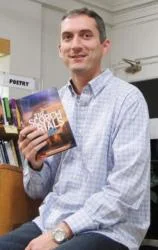
Sergey Donskoy
- Education and Early Work
- A Career in Crime Fiction
- Agents, Officers and Underworlds
- Public Profile and Legacy
Born in the Donbas in 1955, Sergey Donskoy built a career writing fast-moving crime and espionage fiction populated by investigators, intelligence officers and men of the underworld. His books moved through a distinctly commercial literary world of numbered series and punchy titles, where a reader could return to familiar agents and criminal crews for the next dangerous assignment.
Education and Early Work
Donskoy studied economics at a trade institute, according to publisher biographies, and spent years working in commercial organizations before turning to fiction full time. That shift gave his career an unusual shape: he came to crime writing after a long stretch in business, rather than following a conventional route through literary circles. The available public profiles offer little detail about his family or private life, keeping the emphasis on his work and the transition into authorship.
A Career in Crime Fiction
Donskoy became known for action novels, police thrillers and stories of organized crime. His plots repeatedly draw on the machinery of law enforcement and security services, setting agents and investigators against criminal networks and high-stakes conspiracies. These are fictional adventures, not accounts of the real institutions or cases that their titles evoke.
Catalogs of Ukraine’s Vernadsky National Library document his books appearing with publishers in Donetsk, Kyiv and Kharkiv. Among the titles recorded are “In the Hellish Inferno” (“V adskom pekle”), “The Deadly Cold” (“Smertelny kholod”) and “War by the Rules” (“Voina po poniatiiam”). Their publication across several Ukrainian cities gives a sense of a sustained working bibliography rather than a single breakout novel.
Agents, Officers and Underworlds
A major part of Donskoy’s output was organized in series, including “Special Forces: Antiterror Group,” “FSB Major Oleg Gromov” and “FSB Captain Yevgeny Bondar.” The recurring protagonists gave readers a route into a familiar thriller universe, while each new assignment supplied its own crisis. In other books, the focus shifted toward criminal codes and gangland loyalties, as in the “Law for the Mob” series.
The range of titles in library and publisher catalogs suggests a writer comfortable moving between spy plots and street-level crime stories. “The General’s Games,” “The Frozen Authority” and “Let Others Die” are among the books associated with his wider bibliography. Their dramatic names point toward the hard-edged, high-stakes storytelling that defined his commercial niche.
Public Profile and Legacy
Donskoy has kept a low public profile; available biographical notices concentrate on his education, former business career and books rather than on his relationships or personal affairs. No well-documented awards or major public controversies appear in the sources reviewed. His clearest legacy is the body of serialized, Russian-language crime and espionage novels published in Ukraine and distributed through broader commercial book channels. For readers drawn to secret operations, criminal rivalries and resourceful fictional officers, the series offered a steady stream of returning characters and new dangers.