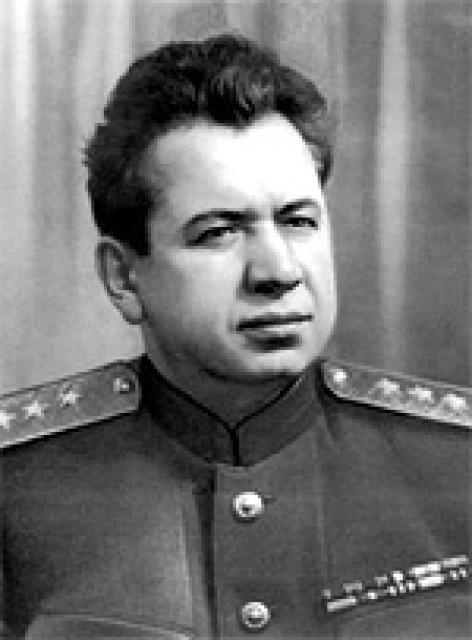
Sergey Kruglov
 Russia
Biography of Sergey Kruglov
Sergey Kruglov was a prominent Soviet politician and a key figure in the state security organs of the USSR. He was born in the village of Ustye in the Tver region, in the family of a peasant. Kruglov joined the Communist Party in December 1928 and went on to hold various positions within the party and the government.
Early Career
From 1928 to 1931, Kruglov worked in agriculture as a farm laborer, tractor driver, and repair worker. He also served as a secretary and chairman of the Nikiforovskoye village council in the Tver region. In 1931, Kruglov began his studies at the Moscow Industrial Pedagogical Institute named after K. Libknecht. He later studied in the Japanese sector of the Moscow Institute of Oriental Studies and the Historical Institute of the Red Professorship.
Rise in the Ranks
In 1938, Kruglov was appointed to work in the NKVD (People's Commissariat for Internal Affairs) by the decision of the Central Committee of the Communist Party. He quickly rose through the ranks and became responsible for disciplinary persecutions within the NKVD. In 1939, Kruglov became the Deputy People's Commissar for Internal Affairs and the head of the personnel department of the NKVD. He played a significant role in the arrests and executions during World War II and was also involved in the mass deportations of various ethnic groups.
Minister of Internal Affairs
After the death of Joseph Stalin, Kruglov was appointed as the Minister of Internal Affairs of the USSR in December 1945, replacing Lavrentiy Beria. He held this position until his dismissal in January 1956. During his time as Minister, Kruglov was in charge of the entire repressive apparatus of the Soviet Union. He played a role in the deportation of the German population from the Kaliningrad region and was awarded the Order of Suvorov for these actions.
Later Years
Following his dismissal as Minister of Internal Affairs, Kruglov was demoted to various positions within the government and eventually retired on disability in July 1958. He was later expelled from the Communist Party and lived a modest life. Tragically, on June 6, 1977, Kruglov died after being hit by a train.
Throughout his career, Kruglov received several awards and honors, including the Order of Lenin, the Order of Suvorov, the English Order of Bath, and a medal from the United States for his role in safeguarding conferences in Yalta and Potsdam. However, his legacy is marred by his involvement in political repressions and mass deportations.
Overall, Sergey Kruglov was a significant figure in the Soviet Union's security apparatus, holding key positions and playing a role in various repressive actions during his career.



