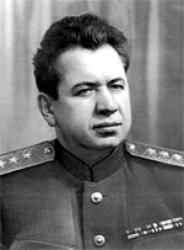
Nikolay ll
 Russia
- Birth and Early Life
- Military Service and Accession to the Throne
- Domestic and Economic Policies
- Industrialization and Economic Growth
- Foreign Policy and the Russo-Japanese War
- World War I and the Collapse of the Monarchy
- Abdication and Execution
- Personal Life and Family
Birth and Early Life
Born on May 18, 1868, in Tsarskoye Selo, Nicholas II was the eldest son and heir apparent of Alexander III and Maria Feodorovna. Raised in a traditional and religious environment, he received his primary education at home under the guidance of an English tutor, Charles Heath. From the age of eight, he commenced his formal studies, which included gymnasium courses and military subjects.
Military Service and Accession to the Throne
Appointed Colonel of the Leib-Guard Reserve Infantry Regiment at age five, Nicholas II developed a passion for military affairs. After reaching adulthood, he entered active military service in 1884 and began regular military duties in 1887.
In 1894, upon the death of Alexander III, Nicholas II ascended to the throne, vowing to uphold the autocracy with unwavering determination. However, his coronation in Moscow was marred by the Khodynka Field disaster, which resulted in the deaths of thousands.
Domestic and Economic Policies
During the early years of his reign, Nicholas II implemented several significant policies. He introduced the gold standard for the Russian ruble, established the "Stolypin Reforms" to modernize agriculture, and passed laws on factory regulations, workers' insurance, and universal primary education. He also repealed taxes on Polish landowners and abolished exile to Siberia.
Industrialization and Economic Growth
Russia experienced significant industrialization during Nicholas II's reign. Coal and oil production increased, and over 70,000 kilometers of railways were constructed. These developments led to advancements in agricultural productivity and economic growth.
Foreign Policy and the Russo-Japanese War
Nicholas II's foreign policy focused on expanding Russian influence in the Far East. However, Japan's surprise attack on the Russian fleet at Port Arthur in 1904 dealt a severe blow to his ambitions. The subsequent defeat in the Russo-Japanese War damaged his reputation and led to growing unrest within the country.
World War I and the Collapse of the Monarchy
The outbreak of World War I in 1914 presented a major challenge for Nicholas II. Against the advice of close advisor Grigori Rasputin, he assumed command of the Russian army but made several strategic mistakes. These errors, coupled with internal turmoil, weak leadership, and growing political opposition, led to the collapse of the Romanov dynasty and the Russian Empire.
Abdication and Execution
In late February 1917, mass protests erupted in Petrograd, calling for the overthrow of the monarchy. Nicholas II initially attempted to suppress the unrest but was compelled to abdicate in March in favor of his brother, Grand Duke Mikhail Alexandrovich. However, Mikhail declined the throne, effectively ending the Romanov dynasty.
Following his abdication, Nicholas II and his family were arrested and exiled to Tobolsk. They were later moved to Yekaterinburg, where the Bolsheviks executed them on the night of July 16-17, 1918, in the basement of the Ipatiev House.
Personal Life and Family
Nicholas II's personal life was a stark contrast to the scandalous behavior of many other Russian monarchs. He married Princess Alice of Hesse and by Rhine in 1894, who took the name Alexandra Feodorovna after converting to Orthodoxy. Their marriage produced five children: Olga, Tatiana, Maria, Anastasia, and Alexei.
Alexei suffered from hemophilia, a hereditary bleeding disorder. This condition led the royal family to rely heavily on the controversial figure of Grigori Rasputin, who claimed to alleviate Alexei's symptoms through prayer.