Sergey Lapin
- Early Life and Education
- Wartime and Post-War Career
- Global Reorganization and Technological Advancements
- Censorship and Political Decisions
- Chairman of Gosteleradio SSSR
Early Life and Education
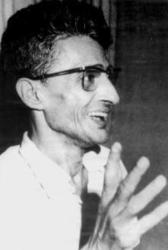
According to his official biography, Sergei Lapin was born into a working-class family. From 1932 to 1940, he worked as a journalist in Leningrad and its surrounding region. In 1939, he joined the Bolshevik party. In 1942, he graduated from the Higher Party School under the Central Committee of the All-Union Communist Party (Bolsheviks).
Wartime and Post-War Career
Despite being of military age (29) and the dire situation on the front lines, Lapin did not serve in the army during World War II. From 1944 onwards, he worked for the State Committee for Radio and Broadcasting under the Council of Ministers of the USSR (the "Radio Committee"). By the late 1940s, he had risen to the rank of Deputy Chairman.
In 1953, Lapin unexpectedly transferred to the Ministry of Foreign Affairs, which was considered a demotion. In 1956, he was appointed Soviet Ambassador to Austria. In 1960, he became Minister of Foreign Affairs of the Russian Soviet Federative Socialist Republic (RSFSR). In 1962, he was promoted to Deputy Minister of Foreign Affairs of the USSR. In this capacity, he served as Ambassador to China from 1965 to 1967. It was during his time in Beijing that Lapin became a favorite of newly appointed General Secretary Leonid Brezhnev, whom he had first met in Vienna when Brezhnev was Chairman of the Presidium of the Supreme Soviet of the USSR.
General Director of TASS and Chairman of the State Committee for Radio and Television
Upon his return to Moscow in 1967, Lapin was appointed General Director of the Telegraph Agency of the Soviet Union (TASS). On April 15, 1970, Nikolai Mesyatsev was removed as Chairman of the State Committee for Radio and Television (the former "Radio Committee"). On April 17, 1970, Sergei Lapin was appointed to the position.
Global Reorganization and Technological Advancements
The period from 1970 to 1980 was marked by a major reorganization and technological overhaul of the USSR's Central Television system. The average daily broadcasting time increased from 1673 hours in 1971 to 3700 hours in 1985. The Ostankino Television Center became one of the largest in the world at that time. In the second half of the 1970s, the existing "Molniya" satellites were supplemented by the "Raduga," "Ekran," and "Gorizont" satellites, significantly expanding the possibilities of space-based television broadcasting. These innovations were directly linked to Lapin's leadership as Chairman of the State Committee for Radio and Television.
Censorship and Political Decisions
Lapin also became notorious for his political decisions. He implemented stricter censorship on radio and television than during the "Thaw" era. Many broadcasts and films were heavily edited or canceled altogether. In 1972, the popular program "Club of the Merry and Resourceful" was canceled. The highly acclaimed program "Kinopanorama" was suspended for a long period of time when it was hosted by Alexei Kapler.
Lapin introduced a system of justified prohibitions. For example, he did not allow people with beards to appear on television. Male hosts were forbidden from broadcasting without a tie and jacket. Women were not allowed to wear pants. Lapin also prohibited close-up shots of singer Alla Pugacheva performing into a microphone, as he believed it resembled oral sex.
Lapin's tenure also became known as a period of anti-Semitism on USSR Central Television. Popular performers such as Vadim Mulerman, Valery Obodzinsky, Maya Kristalinskaya, Aida Vedischeva, Larisa Mondrus, Emil Gorovets, and Nina Brodskaya gradually disappeared from television screens.
Lapin strongly opposed Vladimir Vysotsky's casting as the lead role in the TV series "The Meeting Place Cannot Be Changed," which Stanislav Govorukhin planned to film in 1978. The ban was only circumvented thanks to Govorukhin's persistence and wit.
Chairman of Gosteleradio SSSR
From July 5, 1978, Lapin served as Chairman of the newly established Gosteleradio SSSR. The death of Brezhnev did not end Lapin's career, but with the rise of Mikhail Gorbachev, his tenure was cut short. On December 16, 1985, he was retired along with his long-time deputy, Enver Mamedov. Lapin passed away in Moscow on October 7, 1990, and was buried at the Kuntsevo Cemetery.