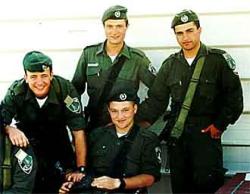
Sergey Sigarev
 Russia
- Biography of Sergey Sigarev
- The Introduction of the Crimson Beret Exam
- The Crimson Beret Exam
- The "No-Hau" of the St. Petersburg Exams
- Selection of Worthy Candidates
- Special Operations of the "Grom" Crimson Beret Holders
Biography of Sergey Sigarev
Sergey Sigarev is a former deputy commander of the "Grom" special forces unit and a retired major. Special forces soldiers are considered the elite of the military. However, each special unit also has its own elite - the best of the best. For example, in the special forces of the Internal Troops of the Ministry of Internal Affairs, soldiers who wear the crimson beret are highly respected. Interestingly, for a long time, this distinctive attribute was only used during demonstration performances. Everything changed in the late 80s when the crimson beret changed its "legal status" and became the highest honor in the eyes of any special forces soldier.
The Introduction of the Crimson Beret Exam
Our interviewee, Sergey Sigarev, a former deputy commander of the "Grom" special forces unit and now the Executive Director of the Special Forces Veterans Association "Reserve," tells the story of the introduction of the crimson beret exam.
According to Sigarev, the exam for the right to wear the crimson beret was introduced in the early 90s when special units of the Internal Troops of the Ministry of Internal Affairs were created. Initially, examination rules were developed by the Moscow special forces group "Vityaz." Therefore, anyone who wanted to wear the crimson beret had to go to Moscow to undergo the tests. However, soon the units in St. Petersburg demonstrated such a high level of training that we were allowed to conduct the exam independently. Interestingly, the same Moscow group later acknowledged that our crimson beret exam was much tougher than theirs. In Moscow, the tests lasted one day, while in St. Petersburg, they took two days.
Not everyone is allowed to participate in the exam. In every special forces unit of the Internal Troops, there is a council of crimson beret holders that decides whether a soldier is worthy of participating in the tests or not.
The Crimson Beret Exam
The crimson beret exam consists of several elements. Soldiers must do at least fifty push-ups, at least twenty pull-ups, and hold the split position for a minute. They are also required to demonstrate their skills in rappelling down a rope from a five-story building while shooting at potential enemies inside the building. The soldier must break a window and enter the premises. Other elements of the exam include marksmanship, a forced march, overcoming a fire assault strip, and hand-to-hand combat.
The "No-Hau" of the St. Petersburg Exams
One of the unique features of the St. Petersburg exams is the team-oriented forced march. In Moscow, a receiver runs ahead, and the soldiers taking the exam follow. If someone falls more than 50 meters behind, they are disqualified. In St. Petersburg, the soldiers are divided into groups of four. They perform a traditional parachute landing from a BTR-80 and then start the forced march. The group's goal is to cover a 15-kilometer distance and finish together. It doesn't matter if someone is tired or falls behind; they must carry each other while fending off simulated enemy attacks. This system tests the cohesion of the unit.
Selection of Worthy Candidates
The selection process for crimson beret holders is done through a collective vote. It takes into account not only the exam results but also how a person has proved themselves in "hot spots" - their composure and decision-making skills. Typically, out of forty candidates, only seven soldiers receive the right to wear the crimson beret. For example, in the "Grom" unit, which consisted of 120 personnel, only 10-12 soldiers had crimson berets.
Special Operations of the "Grom" Crimson Beret Holders
The crimson beret holders from the "Grom" unit participated in various special operations. They were deployed to Karachay-Cherkessia, Ossetia, and Chechnya. Sigarev recalls how their training platoon was put on alert during the events of 1993 in Moscow. Four hours after receiving the signal about the seizure of the State Duma building, they were already on a plane. While the "Vityaz" unit was in Ostankino, their unit stormed the White House. And then, without returning to St. Petersburg, the "Grom" unit headed to North Ossetia.
Sigarev mentions that unlike in the West, there were no units similar to "Grom" or "Vityaz" for a long time in Russia. They gathered information bit by bit from magazines, newspapers, and shared experiences during training. They also learned from Western units, such as "Cobra." Unfortunately, a significant part of their experience came from the bloodshed of their soldiers.