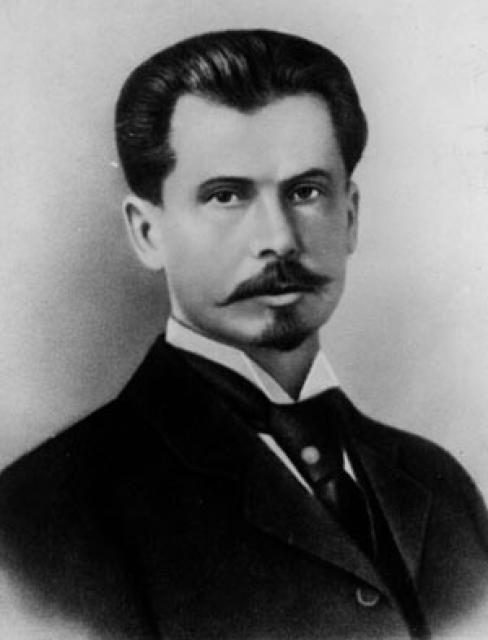
Sergey Vinogradsky
- Sergei Winogradsky: A Pioneer in Microbiology
- Scientific Discoveries
- Return to Russia and Career Highlights
- International Renown
- Legacy and Honors
- Personal Life and Family
- Zinaida (married Yuri Yuryevich Tsvetkovsky)
Sergei Winogradsky: A Pioneer in Microbiology
Early Life and EducationSergei Winogradsky was born in Kiev, Ukraine in 1856 into a wealthy legal family. Despite initially pursuing law at Kiev University, his passion for science led him to transfer to the natural science department. However, unsatisfied, he left university and enrolled in the piano class at the St. Petersburg Conservatory, where he received a music education.
Scientific Discoveries
In 1877, Winogradsky resumed his scientific studies at St. Petersburg University. Upon graduating, he dedicated himself to microbiology and sought further training in Anton de Bary's laboratory in Strasbourg. There, he made groundbreaking discoveries.
In 1887-1888, Winogradsky demonstrated the possibility of energy production through the oxidation of hydrogen sulfide and its use to assimilate carbon dioxide. This process, known as chemosynthesis, revealed the existence of autotrophic organisms beyond photosynthetic plants.
At the University of Zurich, he confirmed the two-stage process of nitrification and isolated nitrifying bacteria. Expanding on his chemosynthesis theory, he proved that carbon fixation was essential for building cell material.
In 1895, Winogradsky isolated Clostridium pasteurianum, the first nitrogen-fixing bacterium.
Return to Russia and Career Highlights
Despite numerous offers to stay abroad, Winogradsky returned to St. Petersburg in 1899. He became director of the Institute of Experimental Medicine, where he studied infectious diseases, including the plague. From 1902 onwards, he focused on agriculture and soil science, studying cellulose decomposition and the nitrogen cycle.
International Renown
In 1905, Winogradsky's health forced him to leave St. Petersburg for the milder climate of Gorodok. After the Russian Revolution, he emigrated to Switzerland and later to Belgrade. In 1922, he joined the Pasteur Institute in Paris, where he established the department of agricultural biology at Brie-Comte-Robert.
Legacy and Honors
Winogradsky's work revolutionized microbiology and ecology. He established the concepts of autochthonous and allochthonous microorganisms in soil. His 1949 publication, "Microbiology of the Soil," became a cornerstone of the field.
In recognition of his vast contributions, the Russian Academy of Sciences named the Institute of Microbiology after him in 2003.
Personal Life and Family
Winogradsky married Zinaida Alexandrovna Tikhotskaya and had four daughters:
Zinaida (married Yuri Yuryevich Tsvetkovsky)
Tatiana (married Konstantin Yuryevich Tsvetkovsky)Ekaterina (married Shramchenko, later Bykhavskaya)
Elena (married Blawzewicz)
He also had an affair with Louise Zillweger, with whom he had a daughter, Zinaida Alexandrovna Rubashkina.