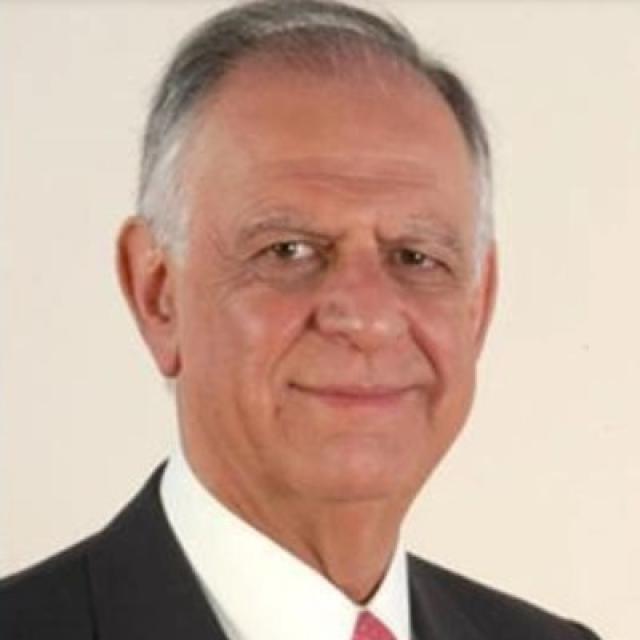
Sergio Fernandez
 Chile
Chile- Early Life and Educational Background
- Early Career
- Social Orientation as Minister of the Interior
- Economic Crisis and Political Maneuvers
- Return to Government and Defeat in Referendum
- Post-Pinochet Political Career
- Accusations and Autobiography
- Conclusion
Early Life and Educational Background
Sergio Fernández was born into a wealthy family in Chile. He pursued a law degree at the University of Chile and became a member of the Bar Association in 1963. In 1971, he earned a professorship in civil law.
Early Career
Following the military coup, Fernández continued his legal practice. In 1976, he was appointed Minister of Labor and Social Security by General Augusto Pinochet's junta. As a conservative gremialist, Fernández's economic and social views aligned with Pinochet's policies.
Social Orientation as Minister of the Interior
In 1978, international pressure forced Pinochet to partially liberalize his regime. Fernández was appointed Minister of the Interior, replacing a military general. His appointment signaled a shift towards a less confrontational approach in dealing with political dissent.
Fernández's first act was to issue a political amnesty decree. However, his ministry also continued to suppress communist and left-wing opposition. He played a key role in drafting Chile's new constitution, which was implemented in 1980.
Economic Crisis and Political Maneuvers
The economic crisis of the 1980s destabilized the Pinochet government. Fernández advocated for the continuation of previous social and economic policies. However, Pinochet dismissed Fernández from both the Interior and Labor ministries in 1982. Despite this setback, Fernández remained a loyal supporter of Pinochet.
Return to Government and Defeat in Referendum
In 1987, Fernández was reappointed Minister of the Interior. His first act was to issue a decree banning torture. He was tasked with ensuring a positive outcome in the October 1988 referendum on extending Pinochet's presidency. The government's defeat in the referendum weakened Fernández's political position.
Post-Pinochet Political Career
After Chile's transition to democracy, Fernández joined the Independent Democratic Union, a right-wing conservative party. He supported Hernán Buchi in the 1989 presidential election, but Buchi lost to Christian Democrat Patricio Aylwin. Fernández automatically became a senator as a former minister. He was re-elected in 1998 and served until 2006.
Accusations and Autobiography
In 1999, Spanish judge Baltasar Garzón attempted to arrest Fernández on charges of political repression committed during his tenure as Interior Minister. Fernández was included in Garzón's "List of 39." In 1994, Fernández published his political autobiography, "Mi Lucha por la Democracia" (My Struggle for Democracy).
Conclusion
Sergio Fernández's political career embodied the right-wing ideologies of the Chilean middle class, which served as the social base of the Pinochet regime. His actions as a minister and his ongoing engagement in political life reflected the complex and often contradictory nature of Chile's transition to democracy.


