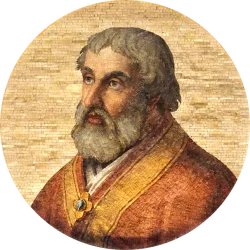
Sergius IV
Sergius IV served as pope during a period when Rome’s political life was shaped as much by aristocratic families and imperial alliances as by the papacy itself. Known before his election as Pietro, he had been bishop of Albano. His pontificate lasted less than three years, leaving few records but offering a glimpse of the delicate balance of power in early eleventh-century Rome.
Early Church Career
Sergius was born in Rome, though the exact date is unknown. He served as bishop of Albano from about 1004 until 1009. The available sources preserve little about his early life or theological work, but his promotion to the papacy placed him at the center of the city’s political rivalries.
He was elected pope and began his pontificate on July 31, 1009, taking the name Sergius IV. His election likely occurred with the support of John II Crescentius, a powerful Roman patrician who exercised considerable influence in the city.
A Papacy Between Rome and the Empire
The pope’s temporal authority was limited. John Crescentius and other aristocratic leaders held much of the practical power in Rome, while the papacy also navigated relationships with the rulers of the Holy Roman Empire. Sergius appears to have sought closer ties with the German king Henry II, whose influence mattered to the political future of the city.
In April 1012, Sergius sent a mission to Germany to consecrate the cathedral at Bamberg, a project favored by Henry II. The embassy reflected the pope’s effort to cultivate relations with the king, though it did not prevent a major shift in Rome soon afterward.
Sergius also issued privileges to monasteries, including exemptions from local episcopal jurisdiction. Surviving documents show the papacy using grants and protections to support religious institutions and strengthen its influence, even when its direct political power was constrained.
Death and Succession
Sergius IV died on May 12, 1012. He was buried at the Lateran Basilica. Within days, John Crescentius also died, and a rival Roman family, the Tusculans, gained control of the city. Benedict VIII, backed by Emperor Henry II, succeeded Sergius, marking a new political alignment in Rome.
Legacy
The short pontificate of Sergius IV is poorly documented, and later writers sometimes attached more dramatic claims to his name than the evidence supports. His known acts show a pope working through church privileges and diplomatic contacts in a city dominated by competing aristocratic powers.
Sergius’s reign stands at a turning point in the politics of Rome. His death coincided with the end of Crescentian influence and the rise of the Tusculan family, while his contacts with Henry II foreshadowed the stronger imperial role that would shape papal affairs in the decades ahead.