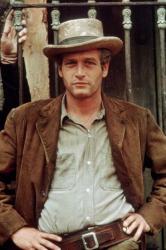
Serif Goren
 Turkey
- Early Life and Education
- Directorial Breakthrough
- Yol and Political Turmoil
- Later Films and Recognition
- Death and Legacy
Şerif Gören became one of the defining directors of socially engaged Turkish cinema, shaping stories about ordinary people, political pressure, and the rules that govern daily life. His career ran from fast-paced editing in the Yeşilçam film industry to major works such as Endişe and Yol. The latter, made with Yılmaz Güney, carried Turkish cinema to the top prize at Cannes and remains Gören’s most internationally recognized achievement.
Early Life and Education
Gören was born on October 14, 1944, in Xanthi, Greece. In 1956, he moved to Turkey on a scholarship and completed his education at Istanbul Boys’ High School. His entry into cinema came through technical work: in 1962, he joined Erman Film Studio as an editor. He developed a reputation for speed and precision, skills that served him through years of editing and assistant directing on a large number of productions.
Gören also worked closely with Yılmaz Güney, then an actor and filmmaker whose stories focused on social inequality and political conflict. The two collaborated on films including Umut, helping establish the creative relationship that would become central to Gören’s later career.
Directorial Breakthrough
Gören’s first major directing opportunity came with Endişe, begun in 1974 with Güney. When Güney was arrested during production, Gören completed the film. The finished work won six awards at the 1975 Antalya Film Festival, including Best Film and Best Director, and established Gören as a director in his own right.
He followed it with a remarkable run of films that examined labor, migration, family life, and social change. Köprü (The Bridge, 1975), Deprem (The Earthquake, 1976), Nehir (The River, 1977), Derdim Dünyadan Büyük (1978), and Almanya Acı Vatan (Germany, Bitter Homeland, 1979) helped define his socially realist approach. Even within the technical limits of the period, he experimented with visual effects and directorial techniques that brought new textures to Turkish popular cinema.
Yol and Political Turmoil
Gören’s career unfolded amid intense political upheaval. In 1973, he helped establish the Film Workers’ Union. He later chaired the Film Directors Association, and was arrested in the aftermath of the 1980 military coup. He was released in 1981.
Soon afterward, he directed Yol, based on a screenplay Güney wrote while imprisoned. Gören filmed the story in Turkey, while Güney remained closely involved from prison and later worked on the film’s editing after escaping abroad. Yol follows five prisoners granted temporary leave and reveals how state authority, family pressures, and social codes shape their choices. At the 1982 Cannes Film Festival, it shared the Palme d’Or with Costa-Gavras’s Missing. The award made it a landmark for Turkish cinema and confirmed Gören’s place on the international stage.
Later Films and Recognition
Gören continued directing throughout the 1980s, often returning to stories of people caught between personal loyalties and social constraints. His films included Tomruk (1982), Derman (1983), Firar (1984), Kan (1985), Yılanların Öcü (Revenge of the Snakes, 1985), Kurbağalar (The Frogs, 1986), Katırcılar (1987), On Kadın (Ten Women, 1987), and Polizei (1988). These works earned awards at festivals in Turkey and abroad, including recognition for Derman in Valencia, Damascus, and Karlovy Vary, and for Kurbağalar in Nantes.
After the 1993 film Amerikalı, Gören stepped away from feature directing for many years. He returned with Ay Büyürken Uyuyamam in 2011. He also directed television documentaries about Berlin and Strasbourg in the late 1980s and 1990s. The Istanbul Film Festival honored him with a Lifetime Achievement Award in 2019.
Death and Legacy
Gören died in Istanbul on December 8, 2024, aged 80, after suffering a serious head injury in a fall at home. His legacy rests on a body of work that joined popular storytelling with social realism, as well as on the practical craft he brought to filmmaking. With Yol, he helped create a film that crossed borders under difficult political circumstances; with Endişe and the films that followed, he built a distinctive account of Turkish lives in times of change.