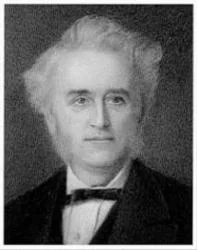
John Sulston
- An early fascination with how things work
- A worm opens a door
- Recognition and public service
- A legacy of shared knowledge
John Sulston helped transform a tiny transparent worm into a powerful guide to how animals develop, and then helped lead the effort to read the human genome. A British molecular biologist celebrated for meticulous bench work and a principled commitment to sharing scientific data, he received the 2002 Nobel Prize in Physiology or Medicine and became a leading voice in the debate over who should control the building blocks of life.
An early fascination with how things work
Born in Buckinghamshire on March 27, 1942, Sulston was the son of an Anglican clergyman and a teacher. He studied natural sciences at the University of Cambridge, graduating in 1963 and completing a doctorate in 1966. After a postdoctoral period at the Salk Institute in California, where he worked with chemist Leslie Orgel on questions about the origins of life, Sulston returned to Cambridge and joined the Medical Research Council’s Laboratory of Molecular Biology.
In 1969, he joined Sydney Brenner’s research group and began studying Caenorhabditis elegans, a small nematode worm that would become one of biology’s most useful model organisms. Its transparency and simple body plan let researchers watch cells divide and develop. Sulston painstakingly traced the worm’s cell lineage, recording the sequence of divisions that takes a fertilized egg to an adult. His work identified the fate of individual cells and helped reveal that programmed cell death is a normal, genetically controlled part of development.
A worm opens a door
The worm project grew from mapping its cells to mapping and sequencing its DNA. Working with Robert Waterston and other colleagues, Sulston helped produce the first complete genome sequence of a multicellular animal. The effort developed methods and expertise that would prove valuable on a much larger project: sequencing the human genome.
In 1992, Sulston became the founding director of the Sanger Centre, now the Wellcome Sanger Institute, in Cambridgeshire. He led the United Kingdom’s contribution to the international Human Genome Project, coordinating a large team and a major sequencing operation. Under his leadership, the institute became a central part of the global effort, which published a working draft of the human genome in 2000 and a substantially completed sequence in 2003.
Sulston and his collaborators argued that genome data should be released quickly and made freely available to researchers. That position placed him at the center of a high-profile dispute with commercial efforts to patent or sell access to genetic information. For Sulston, open access was both practical and ethical: broad sharing, he believed, allowed scientists everywhere to build on discoveries and kept a common scientific resource from becoming the property of a few.
Recognition and public service
In 2002, Sulston shared the Nobel Prize in Physiology or Medicine with Brenner and H. Robert Horvitz. The award recognized their discoveries about the genetic regulation of organ development and programmed cell death in C. elegans. His honors also included a knighthood and, in 2017, appointment as a Companion of Honour for services to science and society.
After leaving the Sanger Centre directorship in 2000, he continued to contribute to genomics and public discussion of science policy. He co-wrote The Common Thread: A Story of Science, Politics, Ethics and the Human Genome with science writer Georgina Ferry, recounting the project from inside the scientific and political debates. He also served on bodies concerned with genetics, ethics and intellectual property, and chaired the University of Manchester’s Institute for Science, Ethics and Innovation.
A legacy of shared knowledge
Sulston died on March 6, 2018, at age 75. His legacy spans two landmark achievements: careful cell-by-cell work that clarified how development unfolds, and leadership that helped bring the human genome into the public domain. He showed how patient experimental science and a strong belief in collaboration could shape not only research, but also the rules by which discoveries are shared.