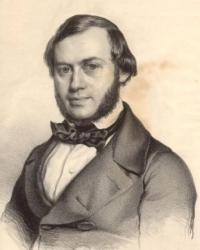
Seymur (Say) Caufman (Coulman)
 USA
USA- Early Life and Training
- Transition to Jazz and Broadway
- Collaboration with Songwriters
- Nightclub and First Broadway Musical
- Collaborations with Neil Simon and Dorothy Fields
- Coleman and Fields also collaborated on "Seesaw."
- Awards and Legacy
Early Life and Training
Seymour Kaufman, later known as Cy Coleman, was born to Max and Ida Kaufman, immigrants from Bessarabia. As a young child in the Bronx, Coleman's remarkable piano playing caught the attention of the local milkman, who recommended him to his son's music teacher. With three music lessons a week, including two for free, Coleman quickly established himself as a child prodigy, performing at Steinway Hall and Carnegie Hall by the age of seven.
Despite his prodigious talent, Coleman's father, a carpenter, was initially resistant to his son's musical pursuits. However, after one particularly intense confrontation, Coleman's father realized his son's determination and never interfered again.
Transition to Jazz and Broadway
After graduating from the High School of Music & Art and the New York College of Music, Coleman began working as a pianist at a restaurant, soon becoming a popular figure among the city's elite. Known as a notorious bachelor, he formed a jazz trio and eventually met publisher Jack Robbins, who suggested changing his name to Cy Coleman.
Collaboration with Songwriters
In the early 1950s, Coleman began collaborating with songwriter Joe McCarthy, penning "Why Try to Change Me Now?" and "I Want to Erase You from My Heart," which were recorded by Frank Sinatra and Nat King Cole, respectively. He also worked with Bob Hilliard, Hal David, and Caroline Leigh, with whom he formed a particularly strong but tempestuous alliance. Their first song together, "Moments Like This," was recorded by Sammy Davis Jr.
Nightclub and First Broadway Musical
In the mid-1950s, Coleman opened his own nightclub, The Playroom, but it proved to be an unsuccessful venture. However, it was during this time that he and Leigh penned the hit "Witchcraft," first introduced by Gerry Matthews and later recorded by Sinatra.
In 1958, Coleman was asked to write four songs for the musical "Gypsy." One of these, "All I Need Is the Girl," became a hit for Tony Bennett, who the following year recorded another Coleman-Leigh song, "The Best Is Yet to Come."
Coleman's first full-length Broadway musical was "Wildcat" starring Lucille Ball. Despite initial nervousness, Coleman and Leigh quickly wrote several versions of the opening song, "Hey, Look Me Over," which became a major hit. They also composed "What Makes My Heart Feel So Good" for Ball.
Collaborations with Neil Simon and Dorothy Fields
Coleman's next musical was "Little Me," featuring a libretto by Neil Simon and starring Sid Caesar. The song "Real Live Girl," initially destined to be cut, unexpectedly became a popular hit in London.
After the dissolution of his partnership with Leigh, Coleman began working with lyricist Dorothy Fields. Together, they created "Sweet Charity," a musical adaptation of "Nights of Cabiria." The title role was played by Shirley MacLaine in the television version, and Sammy Davis Jr. made popular the song "Rhythm of Life."
Coleman and Fields also collaborated on "Seesaw."
Later Broadway SuccessesIn 1977, Coleman composed the music for "I Love My Wife," which was more popular with audiences than with critics. In London, the show starred Richard Beckinsale.
One of Coleman's most ambitious works was the farcical musical "On the Twentieth Century," directed by Harold Prince. The show earned Coleman his first of three Tony Awards.
Coleman's 1980 Broadway musical "Barnum" was a more traditional affair, but it nevertheless became a hit, particularly in London. With this production, Coleman became a Broadway producer for the first time.
Awards and Legacy
Coleman was awarded two additional Tony Awards, for "The Will Rogers Follies" and "Sweet Charity," and an Emmy Award for the television musical "Gypsy in My Soul."
In 1997, Coleman married Shelby and they welcomed a daughter, Lily Cy, three years later. He continued to work on several projects until his death.
Cy Coleman's compositions remain a testament to his talent and versatility, blending elements of classical opera, jazz, and contemporary musical theater. His songs have been recorded by a wide range of artists, from Peggy Lee and Tony Bennett to Frank Sinatra and Barbra Streisand. His Broadway musicals have delighted audiences for decades, solidifying his status as an American musical theater icon.