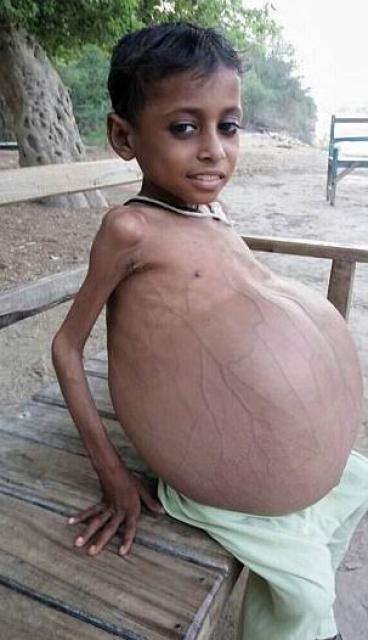
Shah Gul Mazari
 Pakistan
Biography of Shah Gul Mazari
Shah Gul Mazari, the third child in his family, was born seemingly normal and healthy. However, his life changed when he turned over as an infant. His stomach started to swell, leading to problems with breastfeeding. Additionally, Shah would not stop crying.
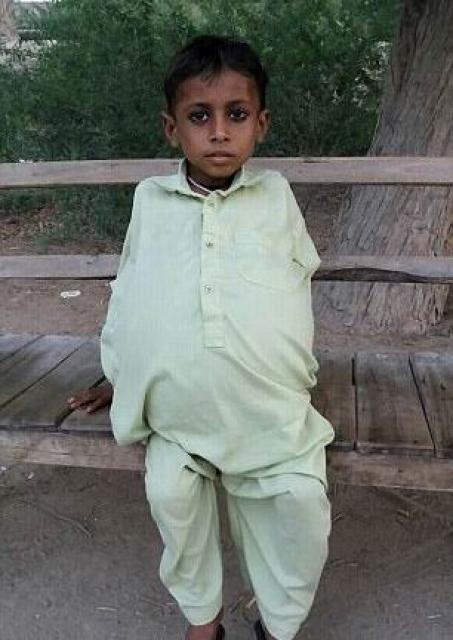
His parents claim that their son underwent a surgery in the past, but it did not work. "We took him to local doctors who diagnosed him with a certain illness and operated on him to remove part of his colon," said Niaz, the father of five children. "But a few days after the surgery, my son experienced pain again, and a few months later, his stomach started to swell again."

Girschsprung's disease, which affects approximately one in every 5,000 infants, is a condition where the nerves controlling the movement of fecal matter are missing in the lower part of the intestine, leading to the accumulation of waste and causing constipation.
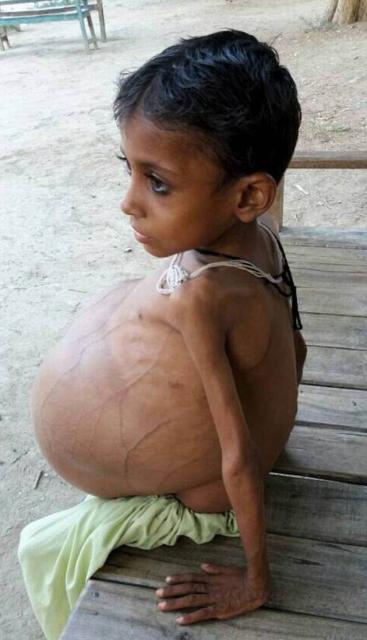
This congenital condition usually presents its symptoms immediately after birth, although sometimes they become apparent only as the child grows older. In some cases, such as Shah's, enterocolitis develops, requiring a surgery to create a colo-rectal anastomosis to divert the intestinal contents into a special pouch.
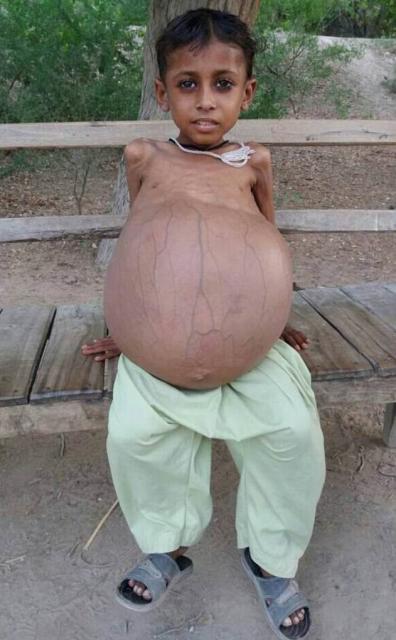
Fortunately, a police officer named Fida Hussain Mastoi offered financial assistance to the Mazari family. "I am deeply concerned about the child. I spoke to his parents and instructed them to bring Shah to Karachi so that I can take him to Jinnah Hospital. I will cover all the expenses needed here in Karachi."
Niaz and Mian hope that, thanks to the generous help of the police officer, their son will not only survive the complications but also be able to lead a normal life. They stated, "We hope that our child will have a bright future if he receives treatment in a reputable hospital. We hope that God will answer our prayers soon."
Girschsprung's disease is a rare anomaly in the development of the colon, primarily affecting newborns and young children. Due to the early onset of constipation and lack of treatment, the disease can lead to a severe intestinal infection called enterocolitis. Symptoms of Girschsprung's disease include the inability to pass meconium, dark and tar-like stools, which healthy infants expel soon after birth, a swollen abdomen, and vomiting bile.
The disease is named after Danish pediatrician Harald Hirschsprung, who first described this anomaly in 1888.