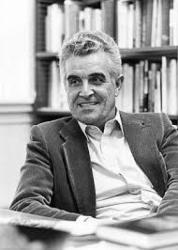
Sharl Montesquieu
 France
Biography of Charles Montesquieu
Charles Louis de Secondat Montesquieu, Baron de La Brède et de Montesquieu, was born on January 18, 1689 in La Brède, near Bordeaux, and passed away on February 10, 1755 in Paris. He came from an ancient noble family. After completing his education at a Catholic college in 1705, he studied law in Bordeaux and Paris. In 1714, he became a counselor, and in 1716, one of the vice-presidents of the parliament in Bordeaux. He lived in Paris from 1726 onwards. In 1728, Montesquieu embarked on a journey across Europe, visiting Italy, Prussia, and the Netherlands. He resided in Great Britain from 1729 to 1731. The English constitutional practice and the views of English jurists and philosophers greatly influenced the formation of Montesquieu's political and legal ideals, which were most prominently expressed in his book "The Spirit of Laws" (1748), an encyclopedic work based on the extensive use of comparative and comparative-historical methods.
Contributions and Ideas
Montesquieu attached great importance to geographical factors, particularly climate, in the formation of positive law and forms of government. He believed that a hot climate engenders laziness and passions, destroys civic virtues, and is the cause of despotic rule. This position gave rise to the perception of Montesquieu as one of the founders of the so-called geographical school in sociology. Considering monarchy as the best form of government, Montesquieu regarded the principle of separation of powers and a federative form of state organization as means to prevent the transformation of monarchy into despotism and ensure political freedom.
Montesquieu's ideas were widely used by Cesare Beccaria, who put forward new principles of criminal law. The theory of separation of powers had a significant impact on the American Constitution of 1787, the French Constitution of 1791, and others. His historical views found expression in his work "Considerations on the Causes of the Greatness and Decline of the Romans" (1734). Montesquieu abandoned a theological understanding of history and put forward the notion of the objective regularity of historical processes.
Literary Works
Montesquieu gained fame as a master of words with his novel "Persian Letters" (1721), one of the best works of the philosophical genre prevalent in the 18th century. The ideas of the novel are presented in the form of correspondence between friends - Persian individuals named Usbek and Rica, who are "naive" yet wise critics of French secular society, full of arrogance from their empty display of "civilization" that cannot be separated from superstition, oppression from the church and authorities, detachment from real life, and rhetoric, conventions, and extreme mannerisms that characterize art. The prose poems "The Temple of Cnidos" (1725) and "Journey to Paphos" (1727) are written in the spirit of hedonistic Epicureanism prevalent in the salons and boudoirs of the nobility, with their favorite mythological characters and erotic plots.