Sharles de Coster
 Belgium
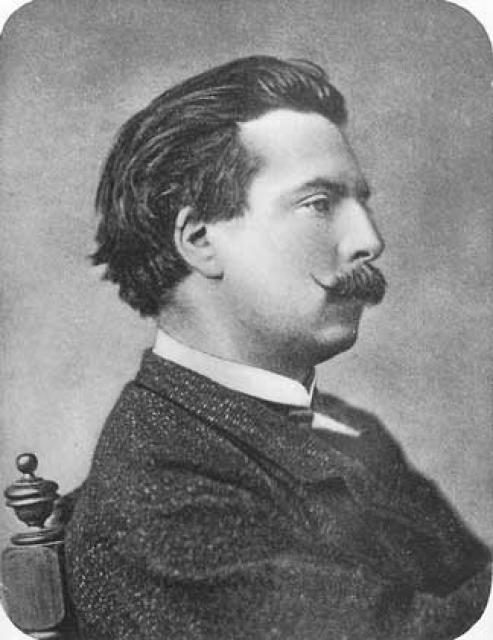
Biography of Charles de Coster
Charles-Theodore-Henri de Coster was born on August 20, 1827, in Munich, Germany. His father served as a manager for the Archbishop, while his mother was a seamstress. Charles spent his early childhood in the Archbishop's palace, where he became his godchild. The family later moved to Belgium and settled in Brussels. Charles had a younger sister, but tragedy struck when their father passed away. Charles was sent to study at the Jesuit College of St. Michael, where he had a terrible experience that made him resentful towards the church and its clergy.
At the age of seventeen, Charles became a junior clerk at the Brussels Bank. He found the work monotonous and longed for a career in literature. He joined a group called "Les Joyeux" (The Merrymakers), where young artists, journalists, poets, and composers dreamed of a future Belgian culture in music, poetry, and painting. However, Belgium lacked literary traditions due to its troubled history of dynastic conflicts and foreign rule.
Charles started writing poetry and made his debut in a manuscript journal produced by "Les Joyeux." He soon realized that writing was not just a pastime but a calling that required his full dedication. Charles left his job at the bank and enrolled at the newly opened University of Brussels, studying literature and philosophy. He was particularly fascinated by lectures on the 16th-century revolution, the Duke of Alba, and the struggles of the common people. During his studies, Charles continued to write, and in 1857, his first book, "Flemish Legends," was published. Although the book surprised many with its retelling of fables of uneducated Flemish people, it established Charles de Coster as a writer.
After university, Charles started collaborating with a weekly magazine called "Uilenspiegel" (The Merry Prankster). It was there that he first encountered his main character, depicted on the magazine's vignette as a medieval jester, laughing heartily. Inspired by this image, Charles began writing a new book that would change everything. In this book, Tyl Uilenspiegel was transported from the 14th century to the 16th century, during the Dutch struggle for independence. The story took a different turn, as Tyl became a revolutionary fighting against injustice and seeking vengeance for his loved ones.
The book, titled "The Legend of Ulenspiegel and Lamme Goedzak," depicted a wide array of characters, including brave rebels, treacherous fishermen, kings, coal miners, monks, judges, and hired soldiers. Many of these characters were real historical figures, and Charles ensured the accuracy of their portrayals by working at the Brussels Archives, where he had access to authentic documents from the period. The novel spanned several years, chronicling events such as the death of William of Orange and the decline of Philip II. Tyl and his beloved Nelle remained forever young and became the spirits of Flanders, unable to die. The book ended with the couple watching over their homeland from a watchtower in Zeeland, hoping for a brighter future.
The Legend of Ulenspiegel and Lamme Goedzak was published in 1867 and solidified Charles de Coster's reputation as a prominent Belgian writer. His novel became a beloved classic, and its popularity spread throughout Europe. Charles's work captured the spirit of the Belgian people, their history, and their struggle for freedom. He passed away on May 7, 1879, leaving behind a legacy of literature that continues to inspire readers to this day.