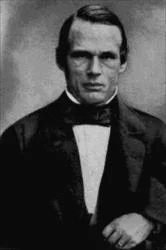
Sima Qian
- A family of court historians
- The Shiji and its vision of history
- Li Ling and the punishment
- An enduring historical model
Sima Qian turned a court historian’s duty into one of the great literary projects of ancient China. His Records of the Grand Historian, known in Chinese as the Shiji, traced the country’s past from legendary antiquity to the reign of Emperor Wu of Han. Its vivid portraits of rulers, generals, thinkers, and outsiders helped establish a model for historical writing that shaped generations of Chinese historians.
A family of court historians
Born around 145 BCE, Sima Qian grew up in a family connected to the Han court. His father, Sima Tan, held the post of Grand Historian, a role tied to court records, calendrical matters, and ritual. As a young man, Sima Qian traveled through different regions, gathering traditions and observing places associated with the past. He later succeeded his father in office and took up the historical project his father had begun.
The court under Emperor Wu was ambitious and powerful, extending Han influence through military campaigns and diplomacy. Sima Qian’s official position gave him access to records and a front-row view of imperial politics, but it also placed him in danger when he spoke openly about events that embarrassed the ruler.
The Shiji and its vision of history
The Shiji brought together more than a thousand years of history in a 130-chapter work. Its structure combined chronological accounts of rulers, tables of dates and lineages, essays on institutions and practices, histories of major states and families, and biographies of notable individuals. This arrangement let Sima Qian tell the story of dynasties and institutions while also showing how individual choices shaped events.
His writing is remembered for its energetic scenes, carefully chosen details, and interest in people beyond the imperial center. The work includes rulers and ministers, military leaders and scholars, but also merchants, assassins, wandering advisers, and figures at the margins of power. Sima Qian did not simply list events: he weighed motives and consequences, sometimes making his judgment through the lives he chose to preserve.
Li Ling and the punishment
Around 99 BCE, the general Li Ling surrendered to the Xiongnu after a difficult campaign. While many officials condemned him, Sima Qian offered a defense of the general’s service and character. Emperor Wu took the remarks as an insult and had the historian imprisoned and sentenced to castration, a punishment that carried profound physical and social humiliation.
Sima Qian later explained that he endured the punishment rather than take his own life because he had not finished the history. In his letter to the official Ren An, he described the anguish of his position and recalled other writers whose work had emerged from hardship. That personal account gives a rare view of the cost of serving the court while pursuing an independent literary ambition.
After his release, Sima Qian returned to official service, eventually serving as a palace attendant, and continued working on the Shiji. He completed the work in the final decades of the first century BCE, though its circulation and final transmission extended beyond his lifetime. The precise date of his death is uncertain; it is usually placed around 86 BCE.
An enduring historical model
Sima Qian’s achievement lived on through the histories that followed. Later dynastic historians adopted the Shiji’s combination of annals, treatises, tables, and biographies, while writers and readers continued to admire its forceful storytelling. His work remains indispensable to the study of early China, though, like any history assembled from ancient records and oral accounts, it must be read with attention to the limits of its evidence.
His life is often remembered through a stark choice: suffer disgrace or die before completing his father’s and his own project. Sima Qian chose to finish the record. The result gave generations of readers a richly human account of the past and secured his place among the most influential historians in Chinese history.