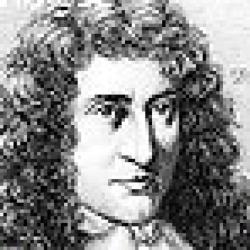
Simeon Puasson
 France
- Simeon Denis Poisson: French Scientist and Mathematician
- Membership in the French and Russian Academies of Sciences
- Contributions to Theoretical Mechanics and Celestial Mechanics
- Advances in Hydrodynamics, Elasticity, and Potential Theory
- Mathematical Research
- Diverse Interests and Atomicism
- Legacy
Simeon Denis Poisson: French Scientist and Mathematician
Early Life and EducationSimeon Denis Poisson was born on June 21, 1781, in Pithiviers, France. After completing his studies at the École Polytechnique in Paris in 1800, he pursued an academic career there, becoming a professor in 1806. In 1809, he was appointed professor at the University of Paris.
Membership in the French and Russian Academies of Sciences
Poisson was inducted into the French Academy of Sciences in 1812 and became an honorary member of the Russian Academy of Sciences in 1826.
Contributions to Theoretical Mechanics and Celestial Mechanics
Poisson's work encompassed theoretical and celestial mechanics. He introduced the analytical formulation of the equations of mechanics in terms of impulse components. In celestial mechanics, he investigated the stability of the motion of planets in the Solar System and solved problems related to planetary orbit perturbations.
Advances in Hydrodynamics, Elasticity, and Potential Theory
In hydrodynamics, Poisson generalized the Navier-Stokes equation to account for compressible, viscous fluids with heat transfer. In elasticity, he defined Poisson's ratio and extended the theory to anisotropic materials. In potential theory, he introduced Poisson's equation, which found applications in gravity and electrostatics.
Mathematical Research
Poisson made significant contributions to integral calculus (Poisson integral), summation techniques (Poisson summation formula), partial differential equations, and probability theory. He established a special case of the law of large numbers and proved a limit theorem known as Poisson's distribution.
Diverse Interests and Atomicism
Poisson's research extended to areas such as thermal conductivity, magnetism, capillarity, sound wave propagation, and ballistics. He was an advocate of Pierre-Simon Laplace's atomic theory.
Legacy
Simeon Denis Poisson died in Paris on April 25, 1840. His contributions to mathematics and physics had a profound impact on subsequent scientific developments. His name is associated with numerous mathematical concepts, equations, and theorems, cementing his legacy as a brilliant and influential scientist.