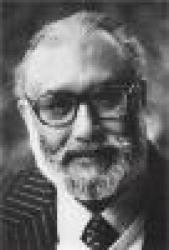
Simon Newcomb
 USA
USABiography of Simon Newcomb
Simon Newcomb was an American economist, astronomer, and physicist of Canadian origin. He was born on March 12, 1835, in Wallace, Nova Scotia, and passed away on July 11, 1909, in Washington. Newcomb studied at Harvard University and later taught mathematics and astronomy at Johns Hopkins University. He was also a recipient of the Order of the Legion of Honor in 1893. Newcomb is included in the list of "100 Great Economists before Keynes" according to M. Blaug.
Career and Contributions
From 1861 to 1877, Newcomb was a professor of mathematics at the United States Naval Academy and an observing astronomer at the United States Naval Observatory in Washington. He served as the director of the American Nautical Almanac from 1877 to 1897. Newcomb's work primarily focused on studying the motion of large planets, determining astronomical constants, and compiling catalogs of precise stellar positions. He also conducted research on the theory of lunar motion, planetary satellites, solar eclipses, and the origin of asteroids.
Views on Aviation
It is often heard that in the 1870s, Newcomb scientifically proved that a heavier-than-air flying machine was impossible. However, this is not entirely true. Newcomb was particularly critical of the work of Samuel Langley, who claimed that he could build a flying machine powered by a steam engine. Newcomb argued that "The twentieth century will see forces of nature which will allow us to fly from continent to continent at speeds far exceeding those of birds. But if we ask ourselves whether it is possible to fly in the air with our current knowledge, whether this set of steel, fabric, and wire, powered by steam force, will represent a successful flying machine with the materials we now have, the answer may very well be different."
Selected Works
Some of Newcomb's notable works include:
- "The Method and Province of Political Economy" (1875)
- "Researches on the Motion of the Moon" (1878)
- "The Organization of Labor" (1880)
- "Principles of Taxation" (1880)
- "The Elements of the Four Inner Planets and the Fundamental Constants of Astronomy" (1895)
- "A Compendium of Spherical Astronomy" (1906)