Sofia Pilyavskaya
 Russia
Biography of Sofya Pilyavskaya
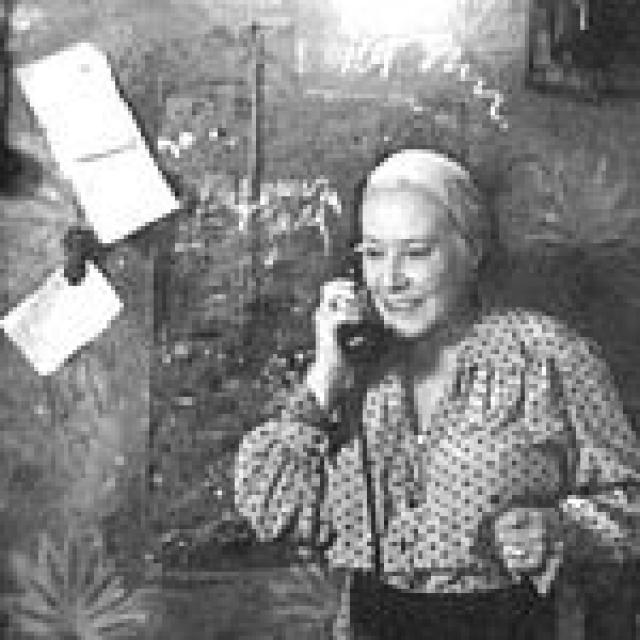
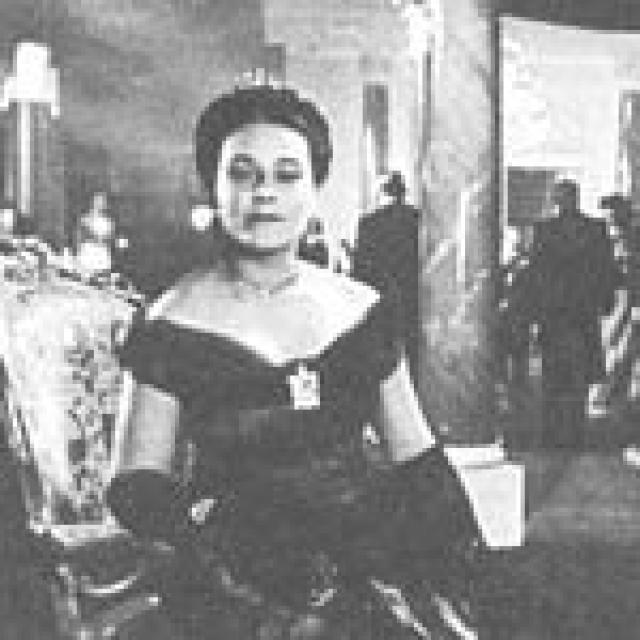
Sofya Pilyavskaya was an actress from the generation of Soviet people who lived through the monumental and tumultuous 20th century. She was born at the beginning of the century and, at its end, was granted a meeting with God. Pilyavskaya passed away at the age of 89 in a hospital in the Kremlin, where she was visited by colleagues from the Moscow Art Theatre (MHAT), actors from other Moscow theaters, neighbors from her prestigious "Stalinist" apartment building in the city center, and the wife of the President of Russia. Her funeral was officiated by Metropolitan Pitirim. Obituaries were published in newspapers and broadcasted on television and radio programs. Pillows adorned with orders and medals were carried in front of her coffin. It seemed like she had lived a long and happy life.
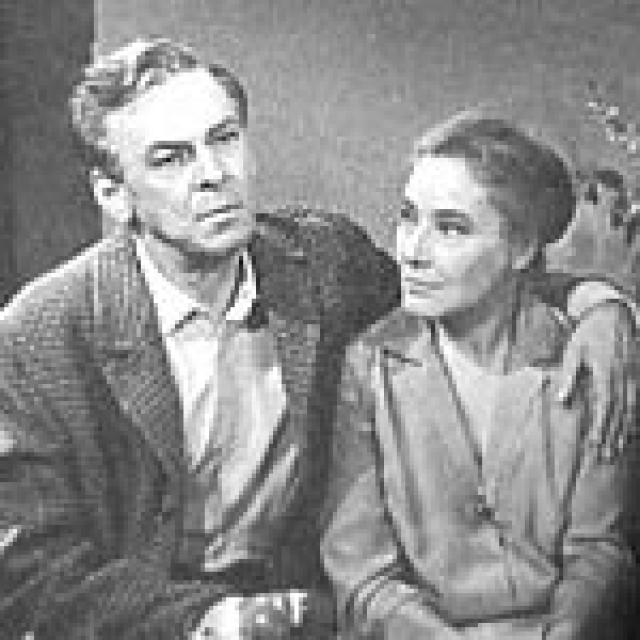
But in her final moments, she remembered her father who had perished in the Gulag, Y.E. Kol'tsov, an actor from the MHAT who had spent 17 years in labor camps. She constantly revisited the theme of fear that had haunted her throughout her life. She was born in Krasnoyarsk, where her father was exiled for life. Her Siberian childhood was remembered as bright and joyful. In early 1917, her father, S.S. Pilyavsky, left to "make a revolution," and the family subsequently moved to the capital - initially to Petrograd, then to Moscow. (Only many years later did the children learn from Lunacharsky's memoirs that their father, a "star" of Lenin's circle, was a high-ranking party official.) After studying with Stanislavsky's sister, Zosya was accepted into the MHAT troupe. It was here that she married actor Nikolay Dorokhin. Upon seeing Venus in a museum, her young husband seriously remarked, "My Zosya will be even better!" (He died on the doorstep of O.L. Knipper-Chekhova's apartment, where they were going to celebrate the New Year in 1954. Since then, Zosya has decorated the Christmas tree in her own apartment 46 times and sat beside it alone on the night of December 31 to January 1.) Unfortunately, Pilyavskaya's great beauty was not in demand in her time. It was, so to speak, a completely anti-Soviet beauty. It was a beauty of subtlety and nobility, aristocracy and pedigree. It was hard, if not impossible, to imagine her in roles as a Komsomol member, weaver, tractor driver, or fearless machine gunner. She had only a few brilliant roles, and then many years of personal theatrical obscurity. Above all else, Pilyavskaya could not stand vulgarity, and vulgarity seemed to be growing all around her. Perhaps that is why she firmly refused to continue her memoirs, stopping at the year 1970. She hated and despised the current theater scene, did not love or understand the new theatrical customs (and did not try to understand them!). Although it was during this time that she regained her popularity - in 1970, Oleg Efremov came to the MHAT and, upon seeing the great actress within the noble lady, cast her constantly. Teaching at the School-Studio also brought her some satisfaction. Nevertheless, she did not feel any spiritual connection with the new era. "I did not want to live until the centennial of the Moscow Art Theatre. But I did. I am so lonely," she once said... She was buried in Novodevichy Cemetery, in her husband's grave. In the same row lie Chekhov, Knipper-Chekhova, Tarkhanov, Moskvin, and Nemirovich-Danchenko. She returned to her own people...
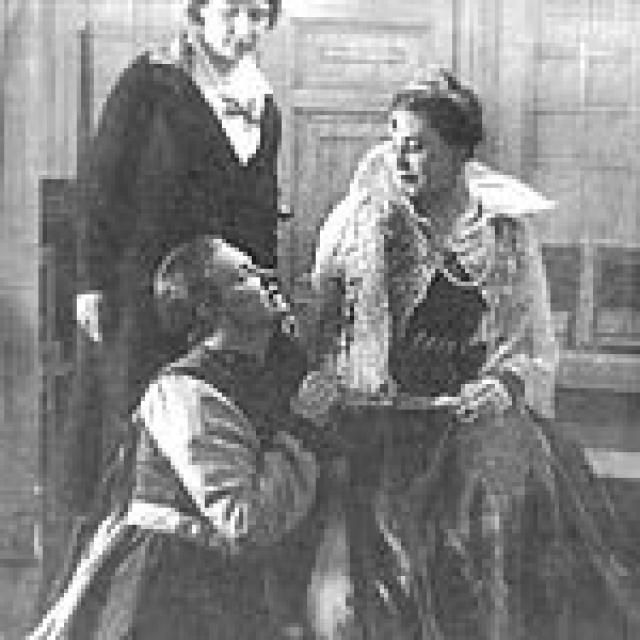
Early Life in Krasnoyarsk
In the Kremlin, I knew every nook and cranny. It was different back then, with informal rules and a combination of incompatible signs of the times - like old palace footmen, praying old women in churches, and Latvian riflemen or Kremlin cadets. On the ground floor of the Officer's Corps, there was a Soviet dining room - a unique club where employees, whenever they could, would socialize outside of work. They ate soup and packed their "second course" in a flat container to take home. Dinner was given as a dry ration: half a loaf of bread made from gray flour, a piece of sausage or cheese. Living in the Kremlin were Stalin, Voroshilov, Chicherin, Kamenev, Bonch-Bruevich, and Trotsky. There were no telephones; urgent calls were given to the designated recipient under a receipt, and often, as children, we had to run to the dining room to find our fathers. Once, when I was sent with a note to my father, I jumped out of the car, bumped into someone's stomach, and received a playful slap. Something funny was said in response to my "ouch!" - and I ran into an open door of the dining room. I write in such detail because that person was Vladimir Ilyich Lenin. When he was being buried, he didn't seem so grand to me, not like in my early childhood. In 1924, I was 13 years old, and I understood the grief and worry of my father and his comrades. We couldn't find them at home; they took turns standing guard at the coffin day and night. People from all over the country and even from abroad came to the funeral. When the factories roared and the trains whistled, when the church bells rang, my brother and I stood on the Kremlin wall, where we were allowed with passes. It was terrifying. More than sixty years have passed, but I remember everything as if it were yesterday.
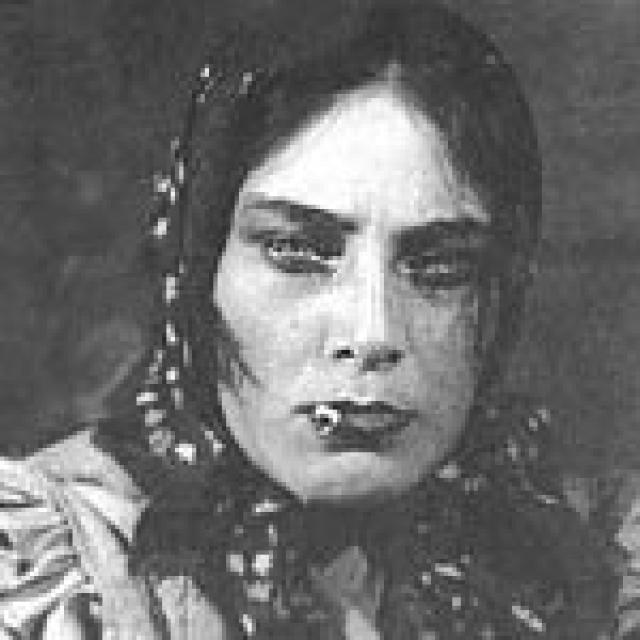
Forest School and the MHAT
At the beginning of winter 1919, my family decided that I should attend a so-called "forest school." It was the first attempt in the new country to educate children who were left unsupervised at home or didn't have a home at all. I resisted with tears, but my mother took me to Mamontovskaya station. The single-story wooden school had a few rooms with iron beds lined up tightly, thin mattresses, thin blankets, and flat pillows. There were two strict caregivers, a janitor, and a cook, and most importantly, many freshly shorn girls dressed in various clothes came out to see the new arrival. I froze in fear as they started hurling words at my mother like "Baroness!" and "Bourgeois!" (she was wearing a worn-out, still-Siberian coat made of foal with a kitten fur collar and a similar hat). They led me to a bed by the window, and my mother whispered to me in Polish how good and patient I was, and that I should listen and that she would come on Sunday. As she left, I returned to the room and saw the older girls rummaging through my belongings, scattering them, and laughing, saying, "Pick it up, bourgeois!" I didn't dare pick them up and sat on the edge of the bed, looking fearfully at my belongings. One of them asked, "What's your last name?" I answered, "Zosya Pilyavskaya." After whispering to each other, they began shouting, "Leech, leech, Ziza!" Luckily, I didn't burst into tears... I was also seated on the edge in the dining room. They served porridge in tin bowls and a cup of carrot tea. The girl next to me whispered, "Leave half of the porridge." So I did. I was very scared of them. After eating, we were sent to bed. There were no duvet covers, and the bed smelled strange. I pulled my coat under it, put a sack under my head, which my mother made from a pillowcase, and huddled up. That night, the sack was wet from tears, but I didn't dare sniffle. When the caregiver yelled, "Get up!" in the morning, I saw my empty trunk. Everything was gone, and most importantly, a piece of soap. I wiped myself, but I can't remember with what, definitely not a towel. "Why is she swollen? Why is she red?" one of the supervisors asked, and sent me to lie down as if I were sick. Nobody cared about me, the girls were running around the garden with cries of laughter. They probably weren't mean, probably had a lot of difficulties in their short biographies, and I was a stranger to them. Nobody taught anyone here. Everyone just idled around from meal to meal, and the caregivers only made sure that there were no escapes or serious fights. I was called Leech and Ziza by the others, but they didn't bother me much. Perhaps they considered me very stupid, and because of my stupidity - quiet.
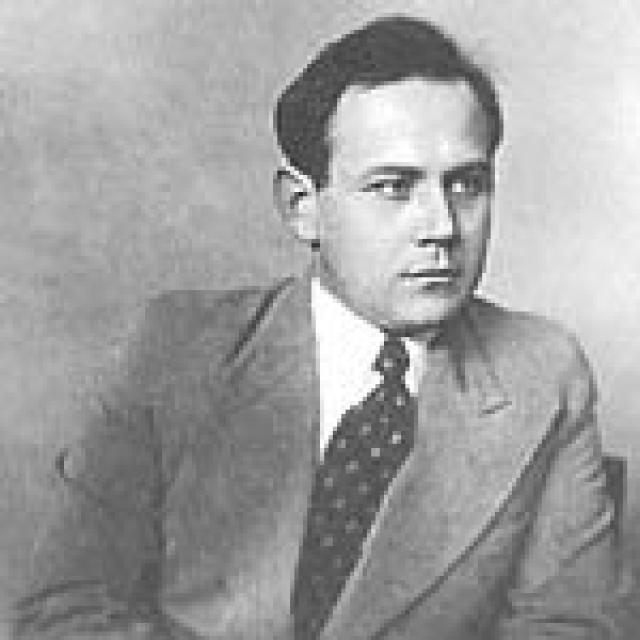
I had a plan to escape by the time my mother would leave. I didn't have money for a ticket, and I didn't know which way to go, so I decided that when my mother started walking back, I would quietly follow her and only reveal myself at the station. And so we sat on the logs behind the terrace, I ate the flatbreads she brought, and I lied skillfully: the girls treated me well, the lessons were interesting, and the food was delicious... When my mother left, I quietly followed her plan and discovered myself only at the station. And then we sat on the logs behind the terrace, I ate the flatbreads she brought, and I lied skillfully: the girls treated me well, the lessons were interesting, and the food was delicious... When my mother left, I quietly followed her plan and discovered myself only at the station. And when we arrived in Vladivostok, my husband Alexey Gribov shouted, "Sonya, Sonya, come here quickly! This is our men's dormitory, this is 1935!" Excited, they and Grigory Konsky showed me various objects from the past, and I barely recognized them, but I was also very excited. And I thought that it had been three years since Fadeev was gone. Until the end of my days, I will be grateful to fate for the joy and honor of being friends with him. They arrested Misha Nazvanov and Valya Tsishevsky - they were both still boys. The fate of Mikhail Mikhailovich, who would later become a popular actor (who doesn't remember Claudius in the film "Hamlet"!) is well-known, but Valya disappeared without a trace. When in 1937 the Art Theatre was sent to Paris for the World Exhibition, I was not included in the cast of "Anna Karenina" (I played Princess Betsy). Who refused me - the theater or someone from the outside? I was worried not only for myself but also for my father - he was the chairman of the Supreme Court of the USSR at the time. It turned out it was the theater (they gave my role to the friend of the MHAT Party organizer). They "compensated" for my non-trip with an apartment in Glinishchevsky Lane (now Nemirovich-Danchenko Street). Kolya and I walked through the empty but beautiful rooms, and I saw him off at the station. When I returned, my husband dressed me from head to toe in everything Parisian, and we went to the House on the Embankment (my father had a 4-room apartment there). Straight from the entrance hall, I saw the sealed door of the study and understood everything. They told us that my brother had been fired from work, and my father's daughter from his second marriage was expelled from the Komsomol. (In 1955, I was given a certificate stating: "Due to the lack of evidence of any crimes, consider Pilyavsky S.S. and Smitten E.G. innocent.") Natasha's mother died in a camp in 1941, and her father was shot immediately.) He was accused of collaborating with three intelligence agencies (by counting the number of languages he knew?!), the newspapers didn't hold back in their expressions: "the wolfish eyes of a cunning predator," "a despicable traitor," and so on. The theater director told me in a whisper, "All I can do for you is to write 'by one's own volition'. They didn't rush with my dismissal (it turned out Stanislavsky hadn't approved my resignation letter), but when the government came to watch the play, there were too many unfamiliar people behind the scenes, and the staff "in civilian clothes" walked me past them with their hands on my sides (checking for weapons?). And how much my husband suffered because I became the daughter of an "enemy of the people"! He had his first heart attack at the age of 33, his last at 48. Somewhere in between, he received a summons from the NKVD. They urged him to "collaborate" firstly politely, then increasingly persistently, with hints - "we won't let you go." They didn't physically harm him, but towards the end of the "conversation" - when they realized he wouldn't agree - they didn't let him go. He was deeply affected. At the end of the "conversation," they brought in a fellow actor who was also being pressured. They let him go, and when he reached the door, he turned around, looked at my husband, and said, "Forgive me, forgive me!" My husband and I had already been married for six years, and we didn't have children. We had a cat, whom, when we were leaving our apartment on Pokrovka Street, we gave to our friends on Arbat Street. The cat's name was Kolya, and he was famous for his resourcefulness. We lived in rented apartments, sometimes in shared apartments, and he always found a way to get back to us. Once, we were invited to the theater in Kutaisi, and a woman gave me a kitten from a basket. I called her Murya. She lived with us for thirty years, all the while missing Kolya. When we returned from Kutaisi, we took an apartment on Tverskaya Street. The bathroom was shared with the neighbors, the kitchen was separate, and the toilet was in the courtyard. It was a difficult time, but we lived it together.