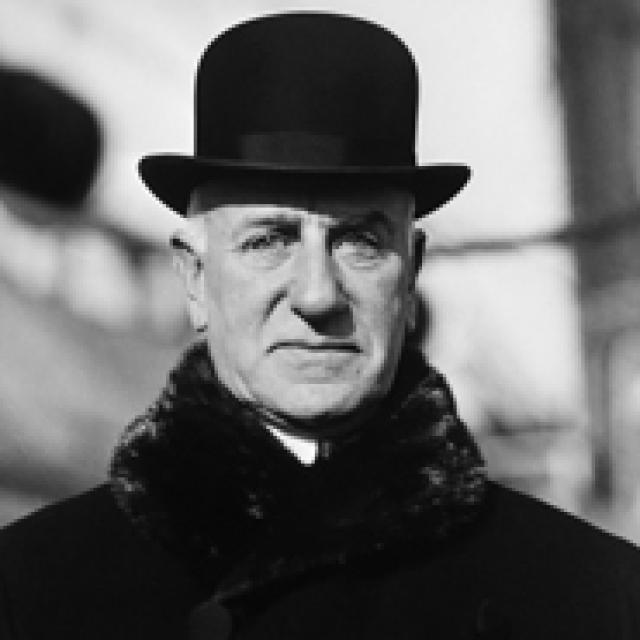
Solomon Robert Guggenheim
 USA
USA- Biography of Solomon R. Guggenheim
- Early Business Career
- Passion for Art and Collection
- The Birth of the Guggenheim Foundation and Museum
- A Legacy of Art and Architecture
Biography of Solomon R. Guggenheim
Solomon Robert Guggenheim, an American businessman, art collector, and philanthropist, is best known as the founder of the Solomon R. Guggenheim Foundation and the iconic Solomon R. Guggenheim Museum in New York City. Born on February 2, 1861, in Philadelphia, Pennsylvania, Solomon was raised in an immigrant family that had amassed wealth through mining operations. He established the Yukon Gold Company in Alaska and engaged in various business ventures.
Early Business Career
After studying German and business at the Concordia Institute in Zurich, Switzerland, Solomon returned to the United States to work for his family's mining and smelting enterprises. The Guggenheims had become wealthy by mining and processing lead, copper, and silver in the western United States. Solomon held several positions within the family business and in 1891, he traveled to Mexico to organize the operations of a new company called Compañia de la Gran Fundicion Nacional Mexicana. He demonstrated his entrepreneurial skills by acquiring mines, importing machinery, negotiating with railway companies, and securing tax benefits from the Mexican government. His success in Mexico led him to become the president of the Braden Copper Company in Chile in 1906. Later, he founded his own gold mining company, Yukon Gold, in Alaska.
Passion for Art and Collection
While working tirelessly in his business ventures, Solomon found time to marry Irene Rothschild, a representative of the renowned Rothschild banking dynasty. Together, they had three daughters, Eleanor, Gertrude, and Barbara. Irene introduced Solomon to the world of art and collecting, igniting his passion for the arts. His art collection began with works from old masters in the late 19th century. However, it wasn't until 1926, when he met Baroness Hilla von Rebay, a prominent German artist, that his interest in contemporary art emerged. Initially drawn to European abstractionists, Solomon gradually embraced non-objective art and other avant-garde movements.
The Birth of the Guggenheim Foundation and Museum
In 1930, Hilla introduced Solomon to Vasily Kandinsky, a Russian artist, and he began acquiring Kandinsky's works. By the late 1930s, Solomon exhibited his growing collection in his New York City apartment at the Plaza Hotel. In 1937, he founded the foundation for the development of contemporary art and opened his first museum in 1939, showcasing his collection of European and American abstractionism. During the Great Depression and World War II, Solomon provided support to numerous artists, establishing scholarships for young talents and offering financial assistance to refugees fleeing Nazi-occupied Europe.
A Legacy of Art and Architecture
In 1943, Solomon and Hilla envisioned a separate building to house a permanent exhibition of the museum's collection and enlisted the renowned architect Frank Lloyd Wright for the project. The unique design of the museum itself became a work of art. Unfortunately, Solomon Guggenheim passed away on November 3, 1949, before the completion of the museum. Three years later, the museum was named in his honor, and construction began in 1956. The Solomon R. Guggenheim Museum officially opened on October 21, 1959, a decade after his death, becoming a testament to his vision and passion for modern art.


