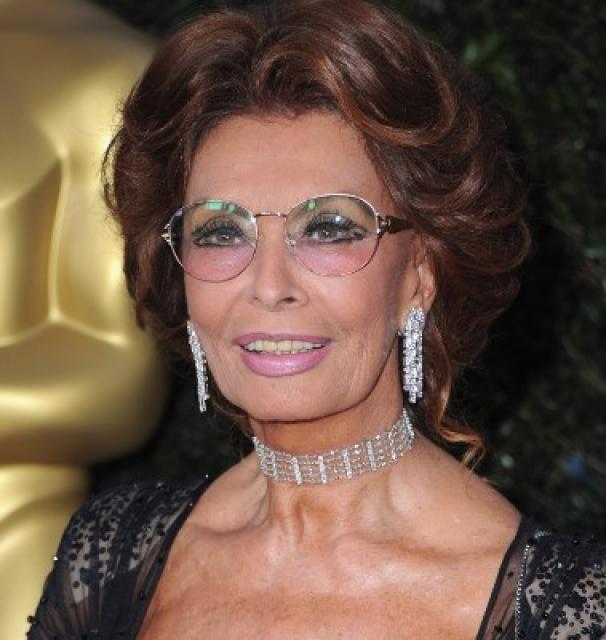
Sophia Loren
 Italy
- From wartime childhood to the screen
- Italian breakthrough and international stardom
- Family and life beyond the spotlight
- A remarkable late-career return
Sophia Loren became one of world cinema’s defining stars through performances that joined glamour with humor, sensuality and emotional force. Moving between Italian neorealism and Hollywood productions, she built a career of more than seven decades and made history when her performance in Two Women earned the first Academy Award for an acting role in a non-English-language film. Her later return to the screen in The Life Ahead showed the enduring power of her presence.
From wartime childhood to the screen
Loren was born Sofia Costanza Brigida Villani Scicolone in Rome on September 20, 1934. Her parents were Romilda Villani, a piano teacher and aspiring actress, and Riccardo Scicolone. She grew up in Pozzuoli, near Naples, in a family with limited means. The hardships of the Second World War left a lasting impression on her childhood and later informed the emotional depth she brought to her work.
As a teenager, she entered beauty contests and began appearing in photo-romance publications and small film roles, initially using the name Sofia Lazzaro. At a 1950 beauty competition she won the title Miss Elegance. The following year, producer Carlo Ponti noticed her and offered her a contract. He became her mentor and, later, her husband. As her career developed, she adopted the stage name Sophia Loren.
Italian breakthrough and international stardom
Loren’s early films made use of her striking screen presence, but it was her collaboration with director Vittorio De Sica that revealed the full range of her acting. In Two Women (La ciociara, 1960), she played Cesira, a mother trying to protect her daughter amid the violence of war. Her performance won the Academy Award for Best Actress at the 1962 ceremony, making her the first performer to win an acting Oscar for a role in a non-English-language film.
The success opened doors in Hollywood. Loren appeared opposite Cary Grant in Houseboat, and worked with stars including Frank Sinatra, Gregory Peck, Paul Newman and Marlon Brando. She moved easily between international productions and Italian films, including Yesterday, Today and Tomorrow, Marriage Italian Style and A Special Day. Her frequent partnership with Marcello Mastroianni produced some of the most memorable performances in postwar Italian cinema.
Loren’s appeal came from more than screen beauty. She could command a comedy with impeccable timing, then turn to drama with an expressive directness that made characters feel grounded and vulnerable. She received another Academy Award nomination for Marriage Italian Style and won numerous international honors. In 1991 she received an Honorary Academy Award recognizing her distinguished career.
Family and life beyond the spotlight
Loren married Ponti, with whom she had two sons, Carlo Jr. and Edoardo. The couple’s relationship faced legal complications because Ponti’s first marriage could not initially be dissolved under Italian law; they later married in France in 1966. Loren continued to work while raising her family, later collaborating with her younger son Edoardo as a director.
She has written memoirs reflecting on her childhood, career and family life. Although her public image became associated with elegance and glamour, Loren often emphasized the resilience and discipline behind her professional success.
A remarkable late-career return
After a long interval away from feature films, Loren returned in 2020 in The Life Ahead, directed by Edoardo Ponti. She played Madame Rosa, a Holocaust survivor who forms an unexpected bond with a Senegalese boy in her care. The film brought her back to a leading role and reminded audiences of the warmth, authority and emotional precision that had distinguished her performances throughout her career.
Loren’s screen legacy spans nearly a century of film history, from postwar Italian cinema to contemporary streaming releases. Her work helped bring Italian actors and stories to global audiences, and her landmark Oscar win remains a defining moment in the recognition of performances in languages beyond English.


