
Sos Sarkisyan
 Armenia
Biography of Sos Sarkisyan
Sos Sarkisyan was born on October 24, 1929, in the city of Stepanavan, Armenia. He graduated from the acting department of the Yerevan Art and Theatre Institute in 1954. From 1954, he worked as an actor at the Sundukyan Academic Theatre. He made his debut in film in 1959, playing the role of Artashes in the film "Boys of the Music Band". Sarkisyan was awarded the State Prize of the Armenian SSR in 1975 for his role as Mkrtich in the film "Triangle" (1967), in 1979 for his theatrical work, and in 1988 for his participation in the TV film "Matenadaran". He was also awarded the All-Union Film Festival prize for Best Actor in 1986. Sarkisyan was honored with the title of People's Artist of the USSR in 1985.
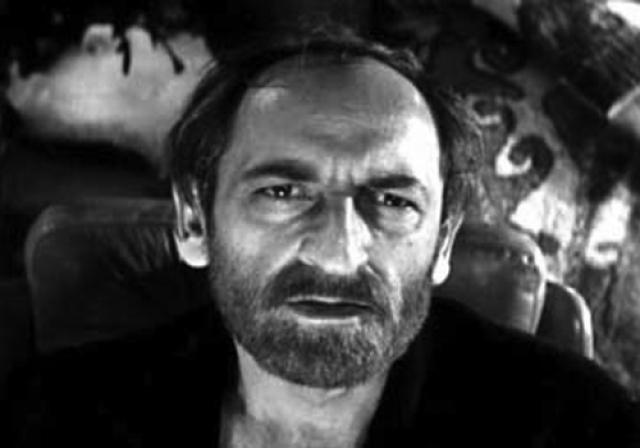
Childhood Memories of Stepanavan
"When I lived in Stepanavan..." Sos began, getting into the car with us. It was morning, and we were driving to the dubbing studio at Armenfilm. The morning was cold, and it was a rainy spring. The Zangi River was swollen on the left, almost level with the parapet. Flows of water merged on the asphalt, creating a muddy fan that splashed onto the front windshield of the Zhiguli car, revealing a rusted wing with a long hole, through which we could see the spinning tire. Sos started telling us: "In our childhood, we admired Galo, Galust. He only did beautiful things. He collected stones and displayed them in the windows. He installed an electric light bulb. We, the kids, would go in the evenings to see the stones and repeat their names, which Galo told us. He carved wonderful things. He even, foolishly, gave Stalin a box with a secret lock." "Stalin needed it," Ovik, our director, said without taking his eyes off the road. "Why foolishly? Many people were giving gifts..." "I defended the unknown Galo, who didn't need my support," I interjected. "But Galo's greatest achievement was his gardens. He planted them not in the city or on collective farms, but somewhere in the gorges. We called them 'Galo's gardens'. And we didn't touch them. He knew how to grow watermelons in Stepanavan, how did he manage that? It used to rain a lot there when I was a child. And I told myself: I will definitely leave, grow up, and leave. And now, in Yerevan, it's raining, it's cold. We work for a long time, two shifts, in a dark, unheated, chilly pavilion, where it's even colder than outside. Sos, looking at the screen, moving his lips in Armenian, speaks the Russian text. We need two independent versions - Russian and Armenian - of our TV series 'Matenadaran' so that not only Armenians, and I believe, not even Armenians as much as all our other peoples, could see this suddenly appearing on the screen, a completely unknown continent of culture, wisdom, and beauty. Moreover, it comes from such a distant time when, for example, my paternal ancestors - the 'foolish Khazars' - roamed the endless steppes and foothills of the North Caucasus, and my maternal ancestors, Slavs, were just settling along the Dnieper, tilling the land at the site of future Kiev."

The Moral Example of Sos Sarkisyan
When I met Sos Sarkisyan, he had already played his famous roles in movies. And as far as I know, the leading role in our TV series 'Matenadaran', in those ten episodes that had already been completed, and in those that are still being filmed, has been his main work in film for the past six years. It was recognized with the Republican State Prize in 1988. But, as they say, that's not the point. Over these years, much water has flowed in the Zangi and other rapid mountain rivers, and the lives of Armenians, like those rivers, have accelerated, rushing through the stones. And more than once, it has been stained with blood. Sos has gone through the same path as his people, naively hoping and losing hope, bitterly parting with the familiar image of Russia - a shield for Armenians, saving this ancient Christian nation from hatred and slaughter.
On my eyes, Sos became the people's tribune. I heard his speeches to the million-strong, boiling waves of people on the square in front of the Opera Theatre in Yerevan. And when it was occupied by troops, I looked at Sos from the midst of the dark-haired, countless crowd - at his tiny figure standing at the top of the multi-tiered stairs, against the backdrop of the repository of ancient manuscripts of Matenadaran. From there, his familiar voice with deep cello-like intonations echoed, amplified multiple times by microphones.
What Sos said was not Shakespeare or Grigor Narekatsi, the Dante of the 10th century. It was Sos Sarkisyan himself, a voluntary servant of his people, standing above them on the crowded street, and in those moments, he was the lord of their hearts.
His moral example was so high that money was transferred to his personal account at the Savings Bank to help the refugees from Sumgait and Baku. Many of them had already been displaced from Nagorno-Karabakh and now wanted to return to their abandoned homes, to revive their homeland. There were queues outside Sos's small one-room apartment. He greeted each person with his customary "Bari luys!" (Good light). Whole families would come in, crying. Their stories could drive one mad in a day. Calls came in from the Savings Bank, asking to confirm the correctness of the issued checks. Sos shouted into the phone, "Pay them!"
"I have paid out two hundred and eighty-one thousand in the last month!" he told me then, on July 20, 1988. I asked him where he got so much money.
"Well, the Catholicos also transferred two hundred and fifty thousand..."
When we were leaving for the US for filming, he refused to go because he was the cashier and had to dispense money. But still, we went together - a year later, to Paris. We filmed private collections, museums. Unable to believe our eyes at the sudden wealth, we admired the treasures at the National Library of Paris. Meanwhile, a specially assigned researcher would turn the manuscript pages for us. Another person would click a stopwatch during the filming, making sure we didn't expose the priceless miniatures.
"We created them, and now they won't let us touch them!" Sos lamented.
Then we walked with Sos along the banks of the Seine. The river seemed still. The trimmed trees warmed their bare branches under the sleepy December sun. Near the Louvre, cages with pigeons, chickens, and rabbits were displayed right on the sidewalk. Roosters were making a deafening noise. It felt like being in a village.
"Good morning!" I said. "Bari luys!" Sos nodded, he had thought something similar.
"When I lived in Stepanavan, we would go to school very early. Boris was in the senior class; by then, he was already the Komsomol secretary. And his younger brother was a pigeon keeper, just like me. Well, we often had fights because I would lure his pigeons to my place. This was known to Boris. And when I was accepted into the Komsomol, he said, 'This hooligan, the pigeon keeper...'"
Years passed. I was already starting my acting career in Yerevan. By that time, Boris had been appointed as the secretary of the district party committee. And when the old men gathered, where they usually gathered, the conversation inevitably turned to the new secretary. And his father felt like the celebrant and kept saying, "My Boris chaired a plenum, my Boris said..."
Then he asked my father, "So, what about your son? An actor? I haven't heard anything about him. They say he's good? Well, if he were good, everyone would know..."
My father turned away in disappointment and said, "I also told him not to go! Why do you need acting?..."
"But the greatest achievement of Galo was his gardens. He planted them not in the city or on collective farms, but somewhere in the gorges. We called them 'Galo's gardens'. And we didn't touch them. He knew how to grow watermelons in Stepanavan, how did he manage that? It used to rain a lot there when I was a child. And I told myself: I will definitely leave, grow up, and leave. And now, in Yerevan, it's raining, it's cold. We work for a long time, two shifts, in a dark, unheated, chilly pavilion, where it's even colder than outside. Sos, looking at the screen, moving his lips in Armenian, speaks the Russian text. We need two independent versions - Russian and Armenian - of our TV series 'Matenadaran' so that not only Armenians, and I believe, not even Armenians as much as all our other peoples, could see this suddenly appearing on the screen, a completely unknown continent of culture, wisdom, and beauty. Moreover, it comes from such a distant time when, for example, my paternal ancestors - the 'foolish Khazars' - roamed the endless steppes and foothills of the North Caucasus, and my maternal ancestors, Slavs, were just settling along the Dnieper, tilling the land at the site of future Kiev."
We have long passed the pigeons and roosters on the waterfront and are standing at the storefront, resentfully examining the shoes displayed in abundance with various options.
"Only a free person can make all of this," Sos says. "A slave cannot make good shoes."


