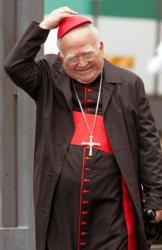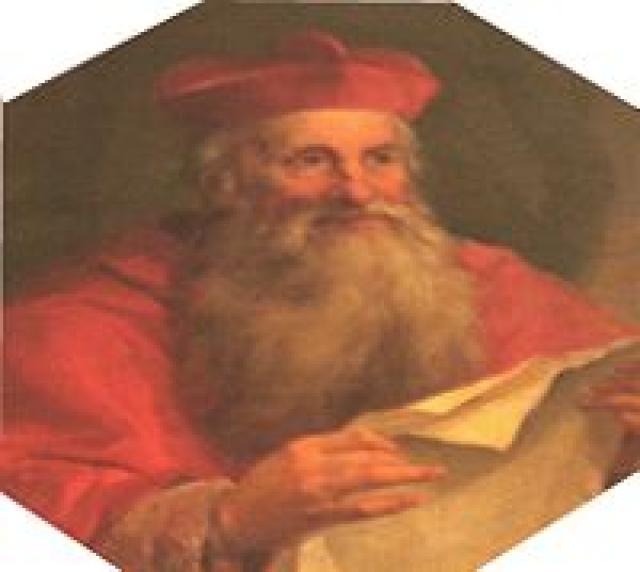
Stanislav Goziy
 Poland
- Stanisław Hozjusz: A Pillar of the Counter-Reformation
- Humanist Influences and Diplomatic Pursuits
- Rise in the Catholic Hierarchy
- Bishop and Counter-Reformation Champion
- Diplomatic Roles and Papal Nuncio
- Participation in the Council of Trent
- Return to Poland and Legacy
Stanisław Hozjusz: A Pillar of the Counter-Reformation
Early Life and EducationStanisław Hozjusz was born into a prominent family of Krakowian merchants. His childhood was spent in Vilnius, where he attended secondary school. In 1519, he matriculated at the prestigious Jagiellonian University in Krakow, where he studied for five years. After graduating, he served as a tutor for the bishop of Krakow.
Humanist Influences and Diplomatic Pursuits
Hozjusz was greatly influenced by the humanist movement, particularly the ideas of Erasmus of Rotterdam. He established connections with prominent European humanists and scholars. In 1529, he traveled to Bologna, Italy, where he furthered his studies in theology.
Rise in the Catholic Hierarchy
Upon his return to Poland, Hozjusz played an increasingly prominent role in the Catholic Church. In 1538, he became the secretary to the Polish king, Sigismund Augustus. He was subsequently appointed as a canon in the dioceses of Warmia, Krakow, and Sandomierz.
Bishop and Counter-Reformation Champion
Hozjusz was consecrated as bishop of Chełm in 1549 and promoted to bishop of Warmia in 1551. He became a staunch supporter of the Counter-Reformation movement, which sought to combat the spread of Protestantism.
Diplomatic Roles and Papal Nuncio
Hozjusz served as a respected diplomat on behalf of the Polish king. In 1558, he moved to Rome and became the papal nuncio to Vienna. In this role, he played a crucial part in the negotiations leading up to the Council of Trent.
Participation in the Council of Trent
Hozjusz participated in the Council of Trent, which convened between 1545 and 1563. He played a particularly significant role in 1563, when he presided over the council. He used this platform to articulate the Catholic faith in response to the Protestant Reformation.
Return to Poland and Legacy
After the council, Hozjusz returned to Poland in 1564. He worked closely with King Sigismund Augustus to implement the reforms decreed by the Council of Trent. Notably, he invited the Jesuits to Poland and established the first Jesuit college in Braunsberg (now Braniewo).
Hozjusz's vast theological works and polemical letters were published in his collected writings, "Opera omnia" (1548). His most influential work was "Confessio fidei catholicae christiana" (1557), which went through 39 editions. He is remembered as a key figure in the Catholic Church during the crucial period of the Counter-Reformation.