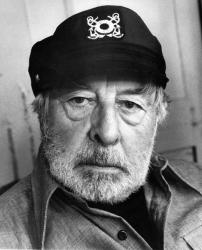
Stanislaw Wispiansciy
 Poland
Biography of Stanisław Wyspiański
Stanisław Wyspiański was a Polish playwright, poet, theatre theorist, artist, and one of the main representatives of Polish modernism. He was born into the family of sculptor Franciszek Wyspiański. He studied at the Kraków School of Fine Arts (1884-1895) under Jan Matejko, and at the private Kolarossi Academy in Paris (1891-1894). He also attended lectures on history, art history, and literature at the Jagiellonian University from 1887 to 1890 and 1896 to 1897.

Artistic Career
Wyspiański was one of the founders (1897) and leaders of the Kraków artistic association "Sztuka" ("Art"). In 1902, he became an associate professor at the Academy of Fine Arts, and in 1906, he became a professor. He was elected as a member of the Kraków City Council (1905). Wyspiański extensively contributed to the field of visual arts, particularly in the implementation of national elements in the modern style. His sketches for stained glass windows in the restored Franciscan Church and Cathedral on Wawel Hill in Kraków (1896-1906) utilized flexible, contour lines and spots of pure colors, combining plant, heraldic, and geometric motifs. He also created pastel landscapes and portraits, which combined a generalized expressive drawing style with spirituality and subtle poetry. Wyspiański's innovative book design achieved decorative unity through font and rhythmically stylized plant ornamentation.
Theatre and Literary Work
Wyspiański collaborated with the Municipal Theatre in Kraków and also worked in the field of decorative arts, designing the interior of the Medical Society House in Kraków (circa 1905), as well as sketches for furniture, fabrics, and metal products. He authored 37 dramatic works, drawing inspiration from various European dramatic traditions. His plays, such as "The Return of Odysseus" (1907), "Achilleis," and a paraphrase of "Hamlet," continued the ancient and Shakespearean traditions. "Legend" (1897) and "Protesilaius and Laodamia" were influenced by Wagner. His plays based on ancient Greek myths, such as "Meleager" (1898) and "The Curse" (1899), interpreted contemporary events in the spirit of ancient tragedy. Wyspiański's plays "Bolesław the Bold" (1900) and "Casimir the Great" (1900) focused on historical themes from Poland's past. His historical dramas, including "The Warsawian" (1898), "The Legion" (1900), and "The November Night" (1904), explored the problematics of Polish romanticism and the national liberation uprising of 1831.
The pinnacle of Wyspiański's dramatic work is considered to be the metaphorical play "The Wedding" (1901). While "The Warsawian" brought him recognition, "The Wedding" brought him fame. His political dramas "Liberation" (1903) and "Acropolis" (1904) addressed the choices in the national liberation struggle. Wyspiański's work is characterized by monumentality and synthesis, combining elements of classical tragedy and patriotic motifs with a realistic vision of the world intertwined with symbolism.