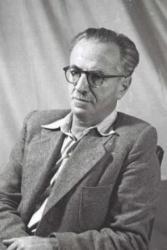
Stanley Baldwin
 Great Britain
Biography of Stanley Baldwin
Stanley Baldwin was a British statesman who was born on August 3, 1867, in Bewdley, Worcestershire. He came from a wealthy industrialist family and received his education at Harrow School from 1881 to 1885 and Trinity College, Cambridge from 1885 to 1888.
After the death of his father, who was a Member of Parliament for a constituency where their family-owned steelworks were located, Baldwin was elected to succeed him as a Conservative Party member in 1908.
In 1916, Baldwin became the Parliamentary Secretary to the Board of Trade and later the Financial Secretary to the Treasury. He joined Lloyd George's post-war coalition government as the Minister of Trade. However, in October 1922, he decided to leave the coalition and lead the Conservative Party independently. With the resignation of Lloyd George, Baldwin became the Prime Minister, and he appointed himself as the Chancellor of the Exchequer. In 1923, as the Chancellor of the Exchequer, he signed an agreement to repay the United States for war loans, which faced criticism in England.
Baldwin's first premiership, which he assumed in May 1923 due to the illness of Bonar Law, lasted only a few months. He was defeated in the general elections, and the first Labour government under Ramsay MacDonald came to power. However, the third general elections in 1924 brought Baldwin back to victory, and he served as Prime Minister for his second term from 1924 to 1929.
During his second premiership, the first general strike took place in England in 1926. In 1927, the Trade Disputes and Trade Unions Act was passed, prohibiting general strikes and considering them as criminal offenses. The second Labour government, which succeeded the Conservatives, had to deal with the economic crisis of 1929. In 1931, a coalition government was formed with MacDonald as the Prime Minister. Baldwin led the largest government faction, the Conservative Party, and held the positions of Lord President of the Council and Deputy Prime Minister. He became the Prime Minister for the third time in 1935, following MacDonald's resignation.
In terms of foreign policy, Baldwin adopted a policy of appeasement, which proved to be unacceptable in the tense atmosphere of the late 1930s. He ignored warnings from Winston Churchill and other politicians about the danger posed by Nazi Germany. In 1937, Baldwin retired from politics after successfully handling the abdication crisis of King Edward VIII. When World War II began, Baldwin was criticized for allegedly weakening the country's defense capabilities. He passed away on December 14, 1947, in Esthley Hall, Stourport-on-Severn.