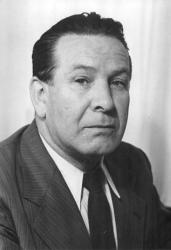
Stanley Meyer
 USA
USA- The Water Fuel Cell: A Controversial Invention
- Creation and Claims
- The Role of "Brown's Gas"
- Terminology Discrepancy
- Public Demonstration
- Scientific Scrutiny
- Legal Troubles
- Expert Testimony
- Conviction and Death
- Legacy
The Water Fuel Cell: A Controversial Invention
SummaryStanley Allen Meyer, an American inventor, claimed to have developed a device capable of converting water into a viable fuel source. This assertion, known as the Water Fuel Cell, has sparked significant debate within the scientific community.
Creation and Claims
Meyer asserted that his Water Fuel Cell separated water into its component gases, hydrogen and oxygen. The hydrogen gas was then burned as a fuel, releasing energy and producing water vapor as a byproduct. Meyer claimed that his device used less energy than traditional electrolysis, circumventing the minimum energy requirements established by conventional science.
The Role of "Brown's Gas"
Meyer's mechanism allegedly incorporated "Brown's Gas," a flammable mixture of hydrogen and oxygen in a 2:1 ratio, similar to that of liquid water. This gas was then mixed with ambient air, potentially violating the first and second laws of thermodynamics if the device functioned as described.
Terminology Discrepancy
Meyer referred to his device as a "fuel cell" or "water fuel cell," where electricity is used to generate hydrogen and oxygen from water. However, in scientific and technical contexts, such devices are typically called electrolyzers. Moreover, fuel cells usually produce electricity, while Meyer's device purportedly consumed it.
Public Demonstration
In an Ohio television news report, Meyer presented a dune buggy allegedly equipped with his Water Fuel Cell. He claimed the vehicle could travel from Los Angeles to New York City using only 22 gallons of water. Meyer asserted that he had replaced spark plugs with "injectors" that introduced the hydrogen-oxygen mixture into the engine cylinders.
Scientific Scrutiny
Philip Ball, writing for the academic journal Nature, dismissed Meyer's claims as "pseudoscience." Despite efforts to debunk such ideas, Ball maintained that the allure of water as a fuel source would persist. The scientific community has consistently declined to publish peer-reviewed research on Meyer's inventions.
Legal Troubles
In 1996, two investors filed a lawsuit against Meyer, alleging fraud in a technology-trading agreement involving the "Meyer Cell" Water Fuel Cell. The vehicle was examined by an expert, who determined that Meyer had failed to provide sufficient access for testing.
Expert Testimony
Three expert witnesses examined Meyer's Water Fuel Cell and reported to the court that they found nothing novel or revolutionary. They concluded that Meyer was using "conventional electrolysis."
Conviction and Death
Meyer was found guilty of "gross and egregious fraud" and ordered to pay $25,000 to the investors. On March 20, 1998, Meyer died suddenly while dining at a restaurant. His brother claimed that Meyer had been meeting with Belgian investors when he abruptly ran outside, exclaiming that he had been poisoned.
Legacy
Meyer's patents have expired, and his work is now publicly available. However, no automobile or engine manufacturers have successfully utilized his designs. Functional water-powered vehicles have not been independently verified.