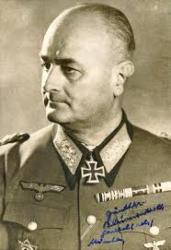
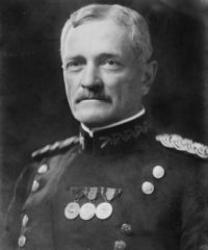
Stasys Rastikis
 Lithuania
- Early Life and Military Career
- Lithuanian Independence and Military Leadership
- Career Advancement and High Command
- Soviet Occupation and Exile
- Post-War Life and Legacy
Early Life and Military Career
Jonas Žemaitis was born in Lithuania, where he attended elementary school and later enrolled in the Zaramai progymnasium. In 1915, he joined the Russian Imperial Army as a volunteer, serving in World War I on various fronts. He graduated from the Tiflis Military School in 1917 and remained on the Caucasus Front until the end of the war.
Lithuanian Independence and Military Leadership
In 1919, Žemaitis joined the newly formed Lithuanian Army and became an officer in the 1st Company of the 5th Infantry Regiment. He fought bravely against Polish and Bolshevik forces, earning two severe injuries in battles. After the second injury, he was captured and held captive in a camp near Tula and in Moscow prisons. In 1921, he was released in a prisoner exchange and returned to Lithuania.
Career Advancement and High Command
Žemaitis continued his service in the 5th Infantry Regiment, later known as the Grand Duke Kęstutis Regiment. In 1928, he joined the General Staff and was promoted to major. His exceptional abilities led to further promotions: Deputy Commander of the 3rd Infantry Regiment, Commander of the 5th Infantry Regiment, Chief of Staff of the 3rd Division, and Head of the Intelligence Department of the General Staff. In 1934, he became Chief of the General Staff.
From 1935 to 1940, Žemaitis served as Commander-in-Chief of the Lithuanian Army and concurrently as Minister of Defense from 1938 to 1940. In 1940, after being relieved from his ministerial duties, he became Rector of the Vytautas the Great Military Academy.
Soviet Occupation and Exile
Following Lithuania's annexation by the Soviet Union, Žemaitis commanded the 29th Territorial Rifle Corps but retired in December 1940. Facing imminent arrest, he fled to Germany in 1941. In June, he returned to Lithuania and served as Minister of Defense in the temporary government. He later worked in the Kaunas War Museum before going back to Germany in 1944.
Post-War Life and Legacy
After the war, Žemaitis was detained in American camps in Regensburg and Schinfeld. In 1949, he emigrated to the United States, initially working as a factory worker. He later taught Russian at Syracuse University, became Chairman of the Lithuanian Council of America and the Supreme Lithuanian American Fund, and taught at the Army Language School. In 1968, he retired and pursued journalism.
Žemaitis passed away in 1985 and was buried in Los Angeles. In 1993, his remains were brought back to Lithuania and reinterred in Petrašiūnai Cemetery. Žemaitis received numerous national and international awards, including the Order of Vytautas the Great, the Order of the Grand Duke of Lithuania Gediminas, and the French Legion of Honor.