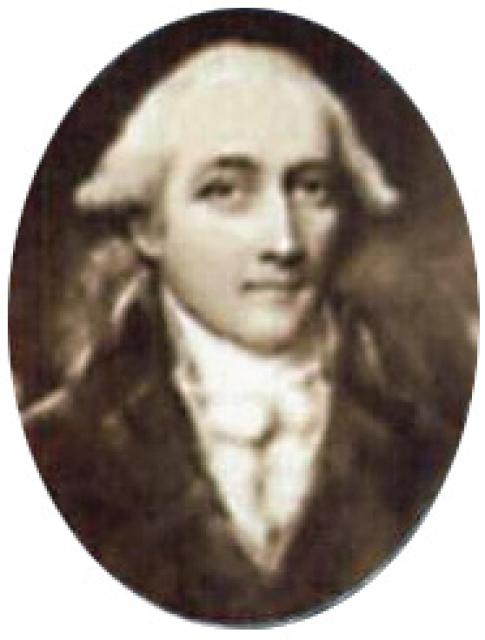
Stephen Sayre
 Great Britain
- Stephen Sayre: American Banker and Alleged Plotter
- Betrayal and Arrest
- Public Outcry and Charges of Overreach
- Downfall of Rochford and Sayre's Vendetta
- Exile and Legacy
Stephen Sayre: American Banker and Alleged Plotter
Early Life and Alleged PlotStephen Sayre was an American banker residing in London at the outset of the War of Independence. He gained notoriety as the defendant in a conspiracy to kidnap King George III. Historians debate the existence of a kidnapping plot and Sayre's involvement. If the plot did transpire, it was amateurishly planned and had little chance of success. However, the alleged plot may have been fabricated to discredit British politicians, an endeavor in which Sayre achieved greater success.
In October 1775, Lord Rochford, Secretary of State for the Home Department, informed the British government of the alleged plot. Amidst heightened tensions, officials encouraged informants to reveal conspiracies against them. That October, Sayre met with Francis Richardson, an American serving in the Tower of London. Sayre proposed a daring scheme to apprehend King George III on his way to open Parliament on October 26th. The king was to be incarcerated in the Tower, after which Sayre's accomplices would arm themselves with weapons from the Tower's arsenal. Sayre claimed the plan had the backing of London's Lord Mayor, John Wilkes. Richardson was tasked with bribing the Tower's guard and ensuring the gates were open when needed.
Betrayal and Arrest
Sayre's choice of accomplice proved disastrous; Richardson chose the crown over the rebellious colonies. He alerted his superior, who accompanied him to confront Rochford. With time running out, Rochford initially hesitated due to the lack of concrete evidence but ultimately decided to act.
Sayre was arrested on October 23rd. In an interrogation at Rochford's office, he vehemently denied any knowledge or involvement in the alleged plot. Sayre was imprisoned in the Tower, and Rochford intensified his investigation.
Public Outcry and Charges of Overreach
News of Sayre's arrest became public, and most of the public saw it as an abuse of authority, with the evidence deemed laughable. Press coverage mocked the specifics of the case and broadened to condemn Rochford's misuse of power and attempts to "make England a second France and the Tower a Bastille." Rochford persisted in holding Sayre for some time, but he was eventually released on bail.
At his trial for plotting to kidnap King George III and transport him to Philadelphia, Sayre declared, "I know very well what use a king might make of a banker, but I am at a loss to know what use a banker could make of a king."
Downfall of Rochford and Sayre's Vendetta
The Sayre affair proved fatal to Rochford's career. Shunned by colleagues, he resigned "on account of ill health." Meanwhile, Sayre was acquitted, released, and had his bail returned. He launched a legal offensive against his accuser, pursuing all possible legal avenues.
Legally, Sayre held a strong position. However, the outbreak of the American War rendered him suspect as a potential enemy agent. Rumors later circulated that intercepted British ships yielded correspondence confirming the plot and Sayre's involvement; no action was taken.
Exile and Legacy
In the summer of 1777, Sayre left England for America. He briefly served as a diplomat, unsuccessfully attempting to court the Russian empress. His staunch support for the French Revolution earned him a reputation as a radical, even within the American government. Recognizing the futility of further attempts at high office, Sayre retired to private life. He died in Virginia in 1818.