Stephen Sondheim
 USA
USABiography of Stephen Sondheim
Stephen Joshua Sondheim, a living classic of American musical theater, was born on March 22, 1930, in the family of Herbert and Janet Sondheim. His father was a successful New York clothing manufacturer, and his mother was a fashion designer. At the age of four, Stephen started picking melodies on the piano, and composer Aaron Copland recognized his talent. He began taking piano lessons at the age of seven. Two years later, his parents divorced, and Janet and her son moved to Bucks County, Pennsylvania. Their neighbor was the talented librettist Oscar Hammerstein II, who was working on "Oklahoma!" - the first musical he co-wrote with Richard Rodgers. This proximity strengthened Stephen's desire to dedicate his life to musical theater, and Hammerstein became his mentor and friend.

In college, at Williams College in Massachusetts, Stephen initially intended to specialize in mathematics, but after taking a music course with Professor Robert Barrow, he graduated with honors and received a Hutchinson Fellowship to study with avant-garde composer Milton Babbitt. Babbitt, like Stephen, was known for his intellectual approach to music, and their love for American popular culture and mathematics made them a perfect match. Under Babbitt's guidance, Stephen studied the structure and harmonic construction of famous classical works and popular musicals.

After two years, Stephen moved to Hollywood, where he wrote scripts for eleven episodes of the television series "Topper" (1953-54). Upon returning to New York, Stephen tried to pursue a career in composing musicals. However, due to the death of the producer, his show "Saturday Night" (1955) was never staged and only saw the lights of the stage in 1997 in London.

During a party, Stephen accidentally met the renowned screenwriter Arthur Laurents, who informed him that he, along with composer Leonard Bernstein and choreographer Jerome Robbins, was working on adapting "Romeo and Juliet," and their team needed a lyricist. Laurents suggested that Stephen speak with Bernstein. Stephen had envisioned his Broadway debut differently - he had dreamed of seeing a musical on stage that not only featured his lyrics but also his music. However, he agreed to participate in the project. The musical "West Side Story" was presented to the audience in 1957. The musical told the story of two rival New York gangs, consisting of Puerto Rican and Polish immigrants, and the love between Tony, a former leader of the Polish immigrants, and Maria, the sister of the Puerto Rican gang leader. Initially, Bernstein planned to write the lyrics himself, and Stephen was only needed as a collaborator. However, Bernstein was so impressed with Stephen's poetry that he eventually even removed his name from the list of lyricists. "West Side Story" became Stephen's first professional experience on Broadway and taught him how to handle complex plots that were previously considered unsuitable for musical theater. Prior to "West Side Story," no one had looked at Shakespearean tragedies as a basis for Broadway musicals, and no one had tried to openly address the problems of contemporary American society.

The next show in which Stephen again served as a lyricist was the musical "Gypsy," based on the autobiography of burlesque queen Gypsy Rose Lee. Originally, Stephen was also supposed to write the music, but American musical theater star Ethel Merman, who was set to play the lead role, insisted on composer Jule Styne. The premiere of the musical took place in 1959 and immediately became a hit of the season. In 1973, "Gypsy" was staged in London, with Angela Lansbury playing Rose, and a year later, it opened on Broadway. Another Broadway production of this show took place in 1989. In 2003, the musical was once again revived on Broadway, with Bernadette Peters playing Mama Rose.

Stephen Sondheim's musical career reached its peak in the 1970s when he began collaborating with renowned Broadway director Hal Prince. Together, they transformed American musical theater by experimenting with traditional forms. Their first joint work was the musical "Company" (1970), which told the story of five married couples in New York City, their mutual friend, a confirmed bachelor, and his three lovers. The show, with its lack of a clear plot, was innovative and marked the beginning of the era of "conceptual musicals." "Company" became a sensation and earned the creators a Grammy. This was followed by the show "Follies" (1971), an elegant parody-pastiche of the works of Kern, Gershwin, Berlin, Porter, Dorothy Fields, and other composers of the older generation. It was a musical about the death of the American Dream, missed opportunities, and the fatal mistakes of youth. In 1973, "A Little Night Music" opened on Broadway, a musical based on Ingmar Bergman's film "Smiles of a Summer Night." The show brought Stephen his third Tony Award, and the song "Send In The Clowns" became a hit and won a Grammy. In 1978, Hal Prince directed a film adaptation of the musical starring Elizabeth Taylor. In 1974, Stephen wrote the shortest of his musicals, "The Frogs," based on Aristophanes' play, adapted by Burt Shevelove. It was performed only eight times in the Yale University swimming pool. Interestingly, a young, unknown actress named Meryl Streep was part of the chorus in this production. In 1976, "Pacific Overtures" premiered on Broadway, a blend of American and traditional Japanese theater styles. The musical told the story of Japan's opening and transformation from an underdeveloped country to a modern advanced nation. The lyrics were written by Stephen in such a way that they minimally used words with Latin roots at the beginning of the show and gradually increased their number by the end. The music was a borrowing and development of traditional Japanese motifs and was accompanied by traditional Far Eastern musical instruments. Japanese performers were invited for the Broadway production of the musical.

The pinnacle of Sondheim and Prince's collaboration was the musical "Sweeney Todd: The Demon Barber of Fleet Street" (1979). The boundaries between song lyrics and dialogue blurred, and the complex plot was filled with intense emotions, resulting in a unique musical thriller. This musical brought the creators another Tony Award.

Many critics felt that these strange, unclassifiable works of musical theater belonged on the opera stage. Indeed, Sondheim's musicals can be seen on the schedules of opera houses: "Sweeney Todd" and "A Little Night Music" are part of the repertoire of the New York City Opera, and the British production of "Pacific Overtures" premiered at the English National Opera. Others believed that Sondheim had simply created a new type of musical - the conceptual musical. The challenging music, literary approach to writing lyrics, liberal use of stage time, incorporation of abstract and surrealistic images, dark humor, and the author's pessimism were all unfamiliar to traditional Broadway musicals with their memorable melodies, optimistic mood, and good-natured humor, which confused critics.
Their next collaboration, "Merrily We Roll Along" (1981), was a failure, and as a result, Sondheim and Prince's partnership dissolved. Stephen then turned to director James Lapine, with whom he created the next musical, "Sunday in the Park with George" (1984). It tells the story of the difficulties an artist faces in pursuing art in a commercial world and reconciling creativity with the mundanity of "normal" life. This musical was awarded the Pulitzer Prize in 1984.
Stephen's next show, "Into the Woods" (1987), offered the audience an unexpected interpretation of familiar childhood fairy tales. Traditional fairy tale characters, such as Cinderella, Rapunzel, the Witch, Little Red Riding Hood, and others, tell a story about making independent adult decisions and what lies beneath the facade of familiar things, what is truly good and evil. The first act of the musical is a retelling of classic fairy tales, with their plots intertwined. After the "happy ending," when all the fairy tale characters find happiness, the second act shows what would happen to them after the words "and they lived happily ever after" if the fairy tales continued in real life. In this musical, Stephen presented a different side of himself - less uncompromising and more accessible to the audience. The composer was immediately accused of taking a purely commercial job for the sake of audience success.
In response to these accusations, Stephen created the musical "Assassins" (1990), which tells the story of attempts to assassinate American presidents. The show confronted the audience with a provocative plot and deeply unsympathetic characters. The use of traditional American song forms combined with black irony was perceived as a mockery of American values. As always, the majority of critics did not accept Stephen's new work. Additionally, the off-Broadway premiere coincided with the start of the Iraq War, and against the backdrop of national unity, the show's themes seemed insufficiently patriotic. Later, the musical still proved popular on Broadway and found success in 2004 during President G.W. Bush's second term and the second Iraq campaign.
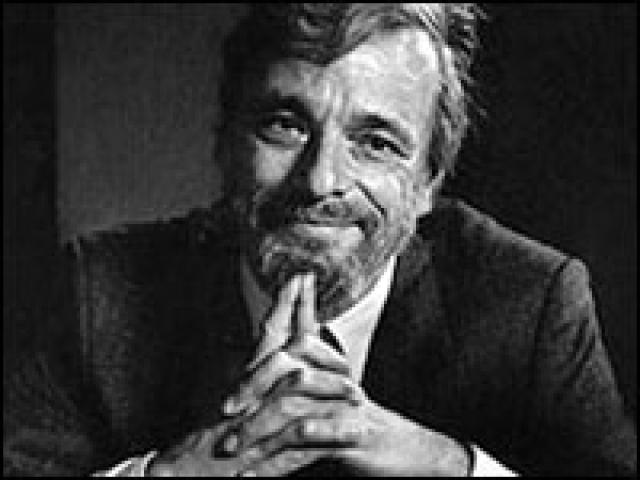
In 1994, the musical "Passion" premiered on Broadway, based on Ettore Scola's film "Passione d'Amore" (1981) and Iginio Ugo Tarchetti's novella "Fosca." James Lapine served again as the scriptwriter and director. The characters in the musical include Giorgio, an officer in the Italian army, Clara, his married lover, and Fosca, a terminally ill sister of another officer. When Fosca first sees Giorgio, she passionately falls in love with him, but her love is unrequited. Fosca's passion is so strong and deep that Giorgio gradually succumbs to her charms and breaks up with Clara. Fosca wins, but at what cost? After their first night of love, she dies without surviving the emotional turmoil. The meaning of the musical is encapsulated in the final words repeated by Fosca and Giorgio: "If you die tomorrow, your love will continue to live in me."
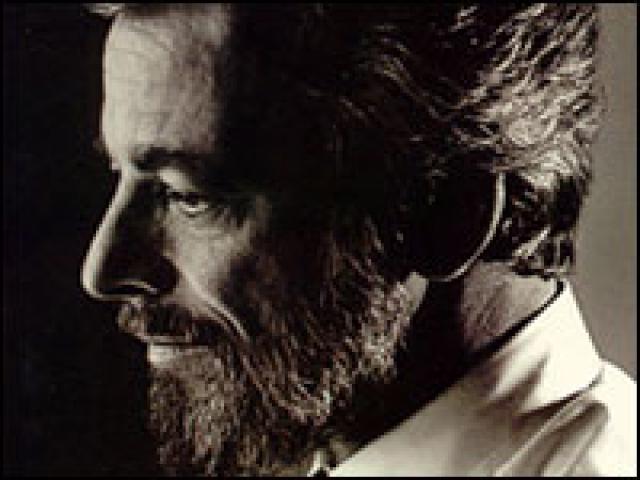
Several revues have been created using some of Stephen's most memorable musical numbers written for various shows, including "Side by Side by Sondheim" (1976), "Marry Me a Little" (1980), and "Putting It Together" (1992).
In addition to musicals, Stephen has composed music and songs for several films, including "Stavisky" (1974; starring Jean-Paul Belmondo), "The Seven Percent Solution" (1976), "Reds" (1981), "Dick Tracy" (1990; starring Madonna and Mandy Patinkin), and "The Birdcage" (1996). He also provided music for the documentary series "Broadway: The American Musical" in 2004.
Stephen Sondheim has had a profound impact on American musical theater, boldly experimenting with music and lyrics, and revolutionizing the form and content of Broadway musicals. He has received numerous awards and honors, including multiple Tony Awards, Grammys, and even a Presidential Medal of Freedom in 2015. His contributions to the genre are immeasurable, and his legacy will continue to inspire future generations of composers and performers.