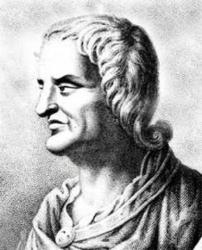
Stesihor
 Greece
Biography of Stesichorus
Stesichorus was an ancient Greek lyric poet and representative of choral melic poetry. He was included in the canonical list of the Nine Lyric Poets. Little is known about Stesichorus' origin and life. According to some sources, he was born in the city of Himera in Sicily, while others claim he was born in the city of Mataur in Locri. It is mentioned that Stesichorus lived between the 37th and 56th Olympiads, and he had two brothers, Mameris and Helionaktas. It is reported that when the tyrant Phalaris threatened the independence of Himera, Stesichorus warned the city's residents against the tyrant's plans. However, his warnings were ignored, and after Phalaris eventually occupied Himera, Stesichorus fled to Catana, where he lived until the end of his life.
There is a legend associated with Stesichorus' origins and the death of Hesiod. According to this legend, Hesiod won a tripod in a poetic competition in Chalcis and went to the Delphic Oracle, where he received a warning: "Death will find you in the beautiful grove of Zeus Nemeios." Hesiod interpreted this as the Nemean Forest on the Corinthian Isthmus and returned to Locri, where he stayed with Amphimander and Ganicter in the city of Oinoai (also dedicated to Zeus Nemeios). There, the poet was suspected of seducing Amphimander and Ganicter's sister and was killed. According to the legend, Stesichorus was the son of Hesiod.
Works and Influence
Traditionally, Stesichorus' original name was Tisias, and only later, due to his achievements in choral melic poetry, he was named Stesichorus, which literally translates to "chorus arranger." Like most of the other poets among the Nine Lyric Poets, the majority of Stesichorus' works have been lost, and his poetry is represented only by fragments in later texts. The largest fragment, which forms the basis of the corpus of Stesichorus' surviving texts, was found in Lille in 1960. It is attributed to Stesichorus that he wrote 26 books (more than all the other Greek lyric poets combined), which primarily consisted of lyric-epic poems that were related to the epic traditions of Homer and cyclic poems. Stesichorus provided new versions and interpretations of old stories in these poems. As an epic poet, Stesichorus had great significance and influence in antiquity. Antipater of Sidon claimed that "the soul of Homer lives in Stesichorus," Pseudo-Longinus called Stesichorus "the most Homeric" of poets, and Quintilian stated that "Stesichorus elevated the weight of epic verse on his lyre." Quintilian also wrote that "if Stesichorus had not exceeded the measure due to his abundance of talent, he could have been considered a worthy rival of Homer."
Stesichorus' Trojan Cycle includes "Helen," "The Destruction of Ilion," "Returns," and "Oresteia." The Phrygian Cycle includes "Eriphyle" (named after the wife of one of the Seven Against Thebes, Amphiaraus), and "Europaea." Among his other epic poems, we know of "The Hunters of the Calydonian Boar" (about the hunt for the Calydonian boar), "Geryoneis" (about Heracles' expedition to the far west to steal Geryon's cattle), "Scylla" (about the encounter between Heracles and Scylla), "Cerberus" (about Heracles' feat with Cerberus), and "Cycnus" (about Heracles' fight with Cycnus, son of Ares, who was transformed into a swan). In his treatment of the stories found in Homer's poems, Stesichorus sometimes offered new versions, drawing material from both living folk traditions and lost literary texts. For example, the myth of Orestes is developed differently by Stesichorus than in Homer's Odyssey. In Homer's version, Orestes, who kills his mother, is simply fulfilling his duty of revenge, but in Stesichorus' version, Orestes is tormented by guilt as a matricide (this interpretation, along with the myth, became the basis for several plays by later Greek tragedians).
One of the most popular legends about Stesichorus is the story of his famous palinode (a retraction or retraction of previous statements). Stesichorus insulted Helen, speaking of her as a traitor to her husband and the cause of the disastrous war. That same night, he was struck blind. He prayed to the gods, and in a dream, Helen appeared to him, saying that her brothers Castor and Pollux had punished him for his verses. Stesichorus wrote a palinode in which he claimed that Paris had taken only Helen's phantom to Troy, while the real Helen was transported by the gods to Egypt, where she remained faithful to Menelaus until the end of the war. This strange myth appeased Helen, and the poet's sight was restored. Plato preserved the opening lines of Stesichorus' palinode in his "Phaedrus": "That was not true, // You did not board the ships // You did not sail to Troy." Stesichorus is also known for his love poetry, which he directly borrowed from folk tales. These include "Kaleike" and "Radine." The former tells the story of a modest and chaste girl who takes her own life after being rejected by her lover. The latter depicts Radine, who is passionately loved by her cousin but is forced to marry a Corinthian tyrant against her will. Her previous lover and her cousin come to Corinth for a meeting, and the tyrant kills them both but later regrets his actions and solemnly buries the slain.
Stesichorus' treatment of the mythical Sicilian shepherd Daphnis (who is blinded for betraying a nymph in favor of a princess) is the first known adaptation of folk songs. Some consider Stesichorus as the founder of bucolic poetry.
The rhythmic structure of Stesichorus' songs is complex compared to, for example, Alcman's choral odes. The verses are long, and the stanzas are voluminous (with a predominant tripartite structure of stanza-antistrophe-epode). The meters predominantly include dactyls, anapests, and epitrites in combination with dactyls (known as logaedics).
Stesichorus wrote in the Ionic dialect with the inclusion of Dorisms, which gave his poetry a character of lyrical elevation. Stesichorus' epic found recognition in the Greek world of Southern Italy (where Ionic epic poetry was less familiar) and spread to Athens (where later Greek tragedians often used the stories developed by Stesichorus). Stesichorus' poetry was highly esteemed in antiquity. Dionysius of Halicarnassus reported that Stesichorus surpassed Pindar and Simonides in the significance of his plots and combined the merits of both poets. It is believed that Aeschylus created his "Oresteia" under the influence of Stesichorus.