
Steve Biko
 South Africa
Biography of Steve Biko
Steve Biko was the leader of the black radical movement in South Africa during the 1960s and 1970s. He was born in King William's Town in the eastern part of the country. He was the third child in his family. His father, a humble clerk, passed away when Steve was only four years old. His mother worked as a cleaner.

Steve attended school in Lovedale but was expelled due to his political beliefs. He had to continue his education at the liberal Catholic school, St. Francis College, in Natal province. In 1966, Steve enrolled at the Medical School of Natal University in Durban, where he met his future mentor and friend, Joshua Nqabuko Maboya Dade.
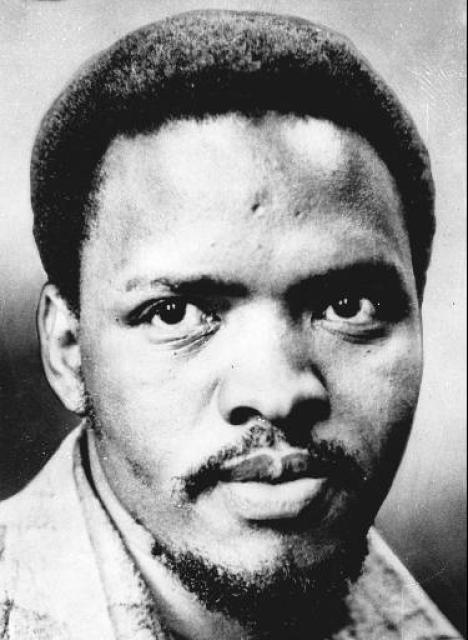
Initially, Steve became a member of the multiracial organization called the "National Union of South African Students." However, he soon believed that students of every race and nationality should have their own organization to fight for their rights. Therefore, in 1968, he left the "National Union" and became a co-founder and the first president of the "South African Students' Organization" (SASO).
In 1972, Steve was appointed as the honorary president of the "Black People's Convention," but later that year, he was expelled from the educational institution. Following this, the authorities of South Africa became aware of his activities, and in March 1973, they banned him from public speaking, which included prohibiting any conversation with more than one person. Quoting Steve in publications and oral speech was also forbidden. However, these restrictions could not limit Steve's activities. He continued to hold meetings and started a newspaper called "Frank Talk."
Steve played a significant role in organizing the youth protests on June 16, 1976, in Soweto. The protests aimed to protect the teaching of certain subjects in schools in the Zulu language, instead of the widely enforced Afrikaans. The action resulted in a bloody massacre of protesters, including many schoolchildren.
On August 18, 1977, Steve was arrested on suspicion of terrorist activities. Based on the Terrorism Act of 1950, over 40,000 black individuals were arrested in South Africa. This law also allowed suspects to be held in detention indefinitely. The government of South Africa referred to Steve's organization, "Black Consciousness," as "Black Nazis."
During his 24-day interrogation, Steve was subjected to torture: he was starved, beaten, and tied to a window grille for an entire day. On September 11, after losing consciousness, he was transported by car to a prison hospital in Pretoria, where he passed away the following day. The South African government claimed that Steve died from a hunger strike, but the autopsy revealed that his death was a result of brain damage.
News of Steve's death quickly spread worldwide. Many journalists, politicians, and diplomats, including those from the United States and Western Europe, attended his funeral. The total number of people who came to bid farewell to Steve exceeded 15,000. However, those responsible for his death were never held accountable.
Steve Biko had a significant influence on the development of the concept of "black consciousness." According to him, apartheid had such a profound impact on the consciousness of the black population in South Africa that they ultimately began to believe in the superiority of the white race.
His personality became legendary, and his name was immortalized in numerous musical works, literature, and films.




