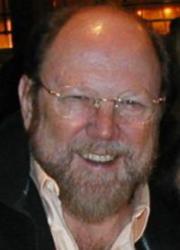
Stokely Carmichael
 USA
USABiography of Stokely Carmichael
Stokely Standiford Churchill Carmichael, also known as Kwame Ture, was a Trinidadian-American civil rights activist and participant in the American civil rights movement in the 1960s. He believed that violence was the worst method to achieve one's goals and that public solidarity and empowerment of black citizens were crucial to combating racial discrimination in American society.

Carmichael was born on June 29, 1941, to Adolphus and Mabel Carmichael. His family immigrated to the United States in 1943 when he was two years old. He attended Bronx High School in New York and graduated in 1960 before enrolling at Howard University. It was at Howard that he first became involved in student activism. He graduated from Howard with a Bachelor's degree in philosophy.

His active involvement in civil rights activism began when he participated in the Mississippi Freedom Summer project as the regional director of the Student Nonviolent Coordinating Committee (SNCC). He also helped organize the Mississippi Freedom Democratic Party (MFDP). Carmichael encountered blatant discrimination in politics when the Democratic Party refused to seat an MFDP delegation that included black delegates.
In 1966, he traveled to Lowndes County, Alabama, with the aim of organizing a grassroots organization to protect the rights and freedoms of the local black population. He attempted to advance the newly formed community's political agenda, but the existing authorities prevented the black party from participating in elections, citing the lack of a pre-election campaign headquarters. In response, Carmichael organized a campaign headquarters and adopted the black panther as the party's emblem, contrasting with the white rooster emblem of the white Democratic Party. During his active years in Lowndes County, the number of votes cast for the black party steadily increased, ultimately leading to the party's dominant positions in local government.
Carmichael firmly rejected violence as a means to achieve his goals, considering it the least effective option that would never lead to the desired outcome. He believed that public solidarity and empowerment of black citizens were essential in confronting racial discrimination in American society. During his time with SNCC, he co-authored the book "Black Power" with Charles V. Hamilton, in which he outlined the essence of the racial problem and his proposed solutions. He also vehemently criticized the Vietnam War in this work.
In the 1970s, Carmichael increasingly referred to himself as Kwame Ture, paying homage to his African mentors, Nkrumah and Toure. He was married twice and had two sons from his second marriage. He passed away in 1998 at the age of 57 from prostate cancer.
Jesse Jackson, a civil rights leader, stated in his speech dedicating Carmichael's work, "In our generation, he was one of those who was called upon to give his life for the transformation of both America and Africa. He was called upon to end racial isolation in our country. He helped to bring down those century-old walls."