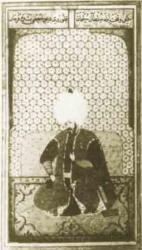
Suleyman I Kanuni
 Turkey
- Suleiman I Kanuni: The Magnificent Sultan
- Early Life and Military Career
- Conquests in Hungary and the Mediterranean
- The Final Campaign and Legacy
Suleiman I Kanuni: The Magnificent Sultan
Suleiman I Kanuni, also known as Suleiman the Magnificent in European literature, was a Turkish sultan who reigned from 1520 to 1566. Under his rule, the Ottoman Empire reached its highest political power. He conquered parts of the Hungarian Kingdom, the Caucasus, Mesopotamia, Arabia, and the territories of Tripoli and Algiers.
Early Life and Military Career
Suleiman the Magnificent, the ninth Turkish sultan, was born in the Black Sea city of Trabzon in 1495. He gained military experience first in his grandfather's Ottoman army and later in his father's. Upon ascending the throne, Suleiman I immediately began preparing for conquests and expanding the borders of the Ottoman Empire.
Conquests in Hungary and the Mediterranean
Suleiman the Magnificent declared his first war against Hungary. In 1521, a massive Turkish army arrived on the banks of the Danube River and captured the city of Belgrade. However, the Ottomans did not advance beyond the Danube at that time.
Later, they conquered the island of Rhodes, which served as a major obstacle to establishing Turkish dominance in the Mediterranean. In 1522, Suleiman the Magnificent landed his best troops on the island and blockaded the city from the sea with his fleet. The Knights of St. John, led by Villiers de L'Isle-Adam, fiercely resisted multiple Turkish assaults and endured heavy bombardment. Eventually, running out of supplies, the knights were forced to surrender. Influenced by the diplomatic skills of Sultan Suleiman himself, they were allowed to leave the island.
With the addition of Rhodes, the Ottoman Empire solidified its maritime power in the eastern Mediterranean. In 1526, an 80,000-strong Turkish army, equipped with 300 cannons, invaded Hungary. They faced a Hungarian army of 25,000 to 30,000 troops, led by King Louis II, which had only 80 cannons.
Prior to the campaign in Hungary, Suleiman the Magnificent signed a treaty with Poland for its neutrality in the upcoming war, allowing Polish forces to come to Hungary's aid. On August 29, 1526, south of the Hungarian city of Mohacs, a decisive battle took place between the two armies. The Hungarians and their allies, European mercenaries, heroically resisted, but the Ottomans' threefold numerical superiority, combined with their effective flanking attacks, proved successful. The Hungarian army lost more than half of its forces, including King Louis II, who drowned while trying to escape in a swamp.
In 1540-1547, Suleiman the Magnificent launched another war against the Habsburg-controlled Austrian Empire, this time in alliance with the Kingdom of France. Taking advantage of Austria's main forces being engaged in warfare in Northern Italy and on France's eastern border, the Turks launched a successful offensive. They invaded Western Hungary and captured the city of Buda in 1541, followed by Esztergom two years later.
In June 1547, the warring parties signed the Peace of Adrianople, reaffirming the division of Hungary and its loss of independence. Western and northern parts of Hungary went to Austria, the central part became a province of the Ottoman Empire, and the rulers of Eastern Hungary, the widow and son of Prince Janos Zapolya, became vassals of the Ottoman sultan.
In the years 1551-1562, another Austro-Turkish war took place. Its duration indicated that a part of the Turkish army had gone on a campaign against Persia. In 1552, the Turks captured the city of Timisoara and the fortress of Veszprem. They then besieged the city-fortress of Eger, where the defenders put up a heroic resistance against the numerous Turkish artillery attacks and several assaults. Despite their efforts, the Turks failed to capture Eger.
While waging wars on land, Sultan Suleiman also conducted constant conquests in the Mediterranean. The Turkish fleet, commanded by the admiral of the Maghreb pirates, Barbarossa, successfully broke the resistance of the naval forces of Venice, Genoa, the Holy Roman Empire, and Spain, establishing full control over the Mediterranean Sea for 30 years. France, which also had a naval fleet in the Mediterranean, did not engage in these maritime conflicts.
In September 1538, Barbarossa's fleet achieved a decisive victory in the Battle of Preveza against the combined fleets of Venice and the Austrian Empire. The crews of Barbarossa's ships, consisting of Maghreb pirates, Greeks from the Aegean Islands, and Turks, fought fiercely to seize valuable military spoils.
The victorious Turkish fleet, led by the fortunate naval commander Barbarossa and his subordinate Maghreb pirate leaders, conducted numerous raiding expeditions against Southern European countries and attacked the coast of North Africa.
In 1560, the Ottoman fleet scored another major naval victory. Near the coast of North Africa, at the island of Djerba, the Turkish armada engaged the combined fleets of Malta, Venice, Genoa, and Florence. European Christian sailors suffered defeat, granting the Turks significant military advantage in the Mediterranean, where thriving maritime trade routes ran.
The Final Campaign and Legacy
In the last years of his military career, the 72-year-old Sultan Suleiman the Magnificent initiated a new war against the Austrian Empire. The Austro-Turkish War of 1566-1568 was fought over the possession of the Transylvania Principality, which had been under the sovereignty of the Ottoman sultan since 1541.
On August 3, 1566, the Turkish army besieged the small Hungarian fortress of Szigetvar. However, the besieged garrison and armed townspeople held their ground, repelling attacks and showing no intention of surrendering to the victor. The Hungarians defended for over a month.
The siege of the Hungarian fortress of Szigetvar became a fateful and final chapter not only in Suleiman the Magnificent's military biography but also in his life filled with conquests. On September 5, the renowned Ottoman conqueror unexpectedly died in his army camp, without witnessing the capture of the small Hungarian fortress.