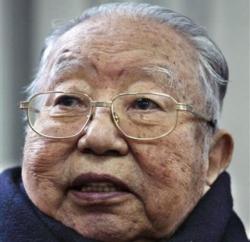
Teng-hui Lee
 China
China- Lee Teng-hui: A Taiwanese Statesman
- Early Life and Career
- Entry into Politics
- Becoming President
- Democratic Reforms
- Taiwanization
- Foreign Relations
- Legacy
Lee Teng-hui: A Taiwanese Statesman
Lee Teng-hui, born in 1923, played a pivotal role in Taiwan's democratic transition and political development. As President of the Republic of China and Chairman of the Kuomintang (KMT) from 1988 to 2000, Lee introduced reforms that transformed Taiwan's political landscape.

Early Life and Career
Lee was born into a Hakka family in Sanzhi, Taipei County, Taiwan, during the Japanese occupation. He studied at the prestigious Kyoto Imperial University in Japan, graduating with a degree in agricultural economics. After returning to Taiwan, he became an economist for the Joint Commission on Rural Reconstruction and taught at several universities.
Entry into Politics
Lee joined the KMT in 1971 and quickly rose through the ranks. He served as Taipei mayor from 1978 to 1981 and governor of Taiwan Province from 1981 to 1984. In 1984, he was appointed Vice President by President Chiang Ching-kuo.
Becoming President
After Chiang Ching-kuo's death in 1988, Lee became President. He faced opposition from conservative KMT members who favored maintaining the status quo with mainland China. However, with the support of younger members of the party, Lee initiated a gradual process of democratization.
Democratic Reforms
Lee's most significant contribution was the introduction of direct presidential elections. In 1996, he became the first democratically elected President of the Republic of China. He also lifted the Temporary Provisions Effective During the Period of Communist Rebellion, which had restricted democratic procedures since 1949.
Taiwanization
Lee promoted "Taiwanization," a movement that sought to distance Taiwan from mainland China and emphasize its unique identity. He supported the development of Taiwanese literature and culture and promoted Taiwanese participation in international organizations.
Foreign Relations
Lee's "pragmatic diplomacy" aimed to balance Taiwan's relations with China and the United States. He called for a "special state-to-state relationship" with mainland China and expanded Taiwan's international presence. However, his efforts were met with resistance from China, which regarded Taiwan as a breakaway province.
Legacy
Lee Teng-hui's legacy is complex and controversial. He is credited with transforming Taiwan from an authoritarian state to a democracy. His reforms paved the way for further political development and Taiwan's emergence as a significant player in the Asia-Pacific region. However, his promotion of Taiwanization and his stance on China's claims over Taiwan continue to be debated.