Cao Kun
 China
ChinaBiography of Cao Kun
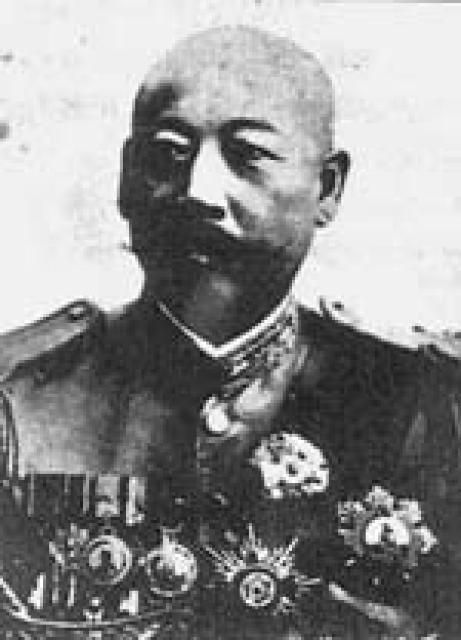
Cao Kun, the 8th President of China and leader of the Zhili Clique in the Beiyang Army, was born into a poor family in Tianjin. In 1894, during the war with Japan, he joined the army and went to fight in Korea. After the end of the war, he joined Yuan Shikai to receive training in the New Army, also known as the Beiyang Army. Becoming a favorite of Yuan Shikai, Cao quickly rose through the ranks. Upon obtaining the rank of General in the Beiyang Army, Cao Kun took over the leadership of the Zhili Clique after the death of Feng Guozhang.
During the 1918 elections, Duan Qirui promised him the position of Vice President, but this plan failed as the majority of the National Assembly left the session, depriving it of a quorum. Cao Kun believed that Duan Qirui had betrayed him and defeated him in the Battle of 1920. He forced Sui Shichang and Li Yuanhong to resign from power and became the President of the Chinese Republic. His rule in Beijing lasted just over a year.
Cao Kun secured the presidency by bribing members of the assembly, with each receiving 5,000 silver dollars. This significantly undermined the authority of the Beiyang government and the assembly. The subsequent elections did not take place due to a lack of quorum. Additionally, tensions arose within the Zhili Clique.
In 1923, Cao Kun introduced a new constitution that proclaimed democratic values, but in practice, it was not upheld by anyone. In October 1924, during the war against Zhang Zuolin, General Feng Yuxiang betrayed Cao Kun and imprisoned him, leading to the Beijing Coup. Occupying Beijing, Feng forced Cao Kun to resign from power. Cao Kun's brother, Cao Jue, was placed under house arrest and took his own life.
Cao Kun was released two years later, as a gesture of goodwill from Feng towards Wu Peifu. He died in his home in Tianjin in May 1938.