Teo van Doesburg
 Netherlands
Biography of Theo van Doesburg
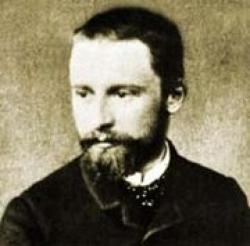
Theo van Doesburg, a renowned Dutch artist, architect, sculptor, and art theorist, was one of the founders and leaders of the De Stijl movement. Born in Utrecht, he demonstrated his talents as a versatile artist and art critic. He also wrote poetry under the pseudonym I. K. Bonset and philosophy under the pseudonym Aldo Camini.
In 1913, van Doesburg became interested in the integration of pure painting and architecture. He conducted research in this field together with J.R. Audd and J. Wils. In 1916, he collaborated with Audd to establish the artistic group "Sphinx" in Leiden, but it was short-lived. In 1917, van Doesburg met Piet Mondrian and together they founded the group and journal "De Stijl". The members of the group worked independently, and some of them were not even acquainted with each other. However, they were all united by their acquaintance with van Doesburg and their belief in the theory of elementarism.
The "De Stijl" group brought together artists and architects and advocated for the "radical renewal of art". The journal served as a platform "to create a unified international module in Life, Art, and Culture" through "pure plastic artwork", by creating a balance between the "universal and individual". Van Doesburg was the ideological inspiration behind the De Stijl group, developing the concept and promoting rationalism. He defended geometric and sculptural architecture as opposed to its pictorial perception. The rational direction of the "De Stijl" group presented an opposition to the pictorial effects of expressionism in the Amsterdam architectural school.
In 1917, together with Audd, van Doesburg made one of the first practical attempts to synthesize painting and architecture in the interior of Audd's villa in Noordwijk, near Leiden. In this project, architecture was interpreted through painting, using open and pure colors for suspended ceilings and geometric windows. Paintings on flat surfaces were integrated into the architectural space, creating tension. The prominent role of windows was in harmony with the principles of "De Stijl" and organically connected to the interior space.
Ten years later, in the cinema and dancehall Lobett in Strasbourg, which was located in an old building designed by F. Blondel and X. Arnaud, van Doesburg interpreted all surfaces following the principles of neoplasticism but on a larger scale. The modularity of the plastic forms was expressed through painting, using open, local colors such as red, yellow, blue, as well as contrasting colors like white, black, and gray. Housing was one of van Doesburg's main concerns, and he prioritized the organization of internal space over the overall plasticity. According to him, each individual element, as a pure spatial projection, should be open from all points "like a crystal dissolved in universal space".
In 1920, van Doesburg undertook a tour-conference across Europe, including the Netherlands, where he closely acquainted himself with the Bauhaus School and the Dada movement in art. During this time, he defined the future architecture, which should abandon the concept of form, represent the sum of independent elements, and be economical, disorderly, and monumental regardless of location and scale. In 1924, he published his first theoretical work, "Fundamental Principles of Neoplasticism", in the Bauhaus publishing house. The original edition was published in Amsterdam in 1919 and then released in six volumes in Munich. In 1922, he also published a new journal, "Mecano", as an appendix to the "De Stijl" journal with a Dadaist orientation.
In 1926, van Doesburg's public falling out with Mondrian occurred, and Audd also decided to discontinue collaboration with van Doesburg, accusing him of dilettantism despite his genius. The architect moved to Paris, where he built his own house and studio in Meudon-Val Fleury (1929-30). In this work, all the concepts and principles of "De Stijl" were collected and reached their culmination.
Van Doesburg's death marked the end of the De Stijl group. Despite the group's short existence and predominantly theoretical orientation, his architectural creativity continues to influence the world of architecture and holds a significant place within it. His concepts of space, based on moving beyond the two-dimensionality of the painting surface and introducing the third dimension, remain relevant and valid today, in organic connection with architecture.