Terry Jones
 USA
- Terry Jones
- A Divisive Chapter in Cologne
- The Qur’an Burning That Made Him Famous
- Politics, Family, and Public Image
Terry Jones
From Small-Town Pastor to Global ProvocateurBorn in October 1951 in Cape Girardeau, Missouri, Terry Jones grew up in the American Midwest and graduated from Central High School in 1969. He spent two years at Southeast Missouri State University but did not earn a theology degree. In 1983, he received an honorary theology doctorate from California Graduate School of Theology, an unaccredited institution; his later use of the title “Doctor” would become a source of controversy in Germany.
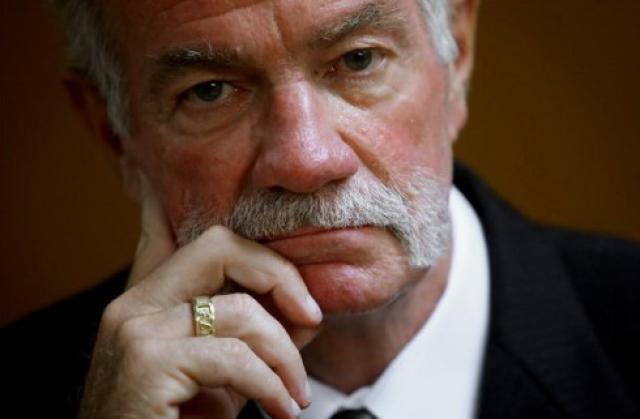
Before entering church leadership, Jones worked as an assistant hotel manager. He then became an assistant pastor with Maranatha Campus Ministries in Kentucky. In 1981 he moved with his first wife, Lisa, to Cologne, Germany, where he founded the Christliche Gemeinde Köln, or Christian Community of Cologne. The charismatic church grew substantially, at one point drawing hundreds of members and, by accounts in the press, approaching a thousand. Jones presented himself as a missionary seeking a Christian revival in Europe.
A Divisive Chapter in Cologne
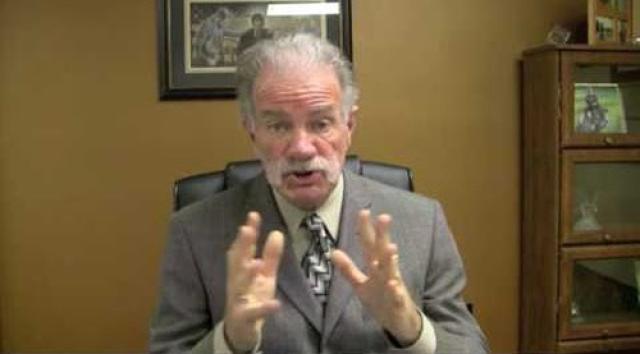
Jones led the Cologne congregation for more than two decades, but the story of his German ministry grew increasingly contentious. Former members and church observers accused him of controlling behavior, pressuring followers for money and labor, and interfering with family relationships. Jones’s supporters and critics offered sharply different portraits of his leadership; the congregation’s board dismissed him in 2008 after years of internal conflict. A Cologne court also fined him for using the “Doctor of Theology” title associated with his honorary degree. The church later continued under new leadership.
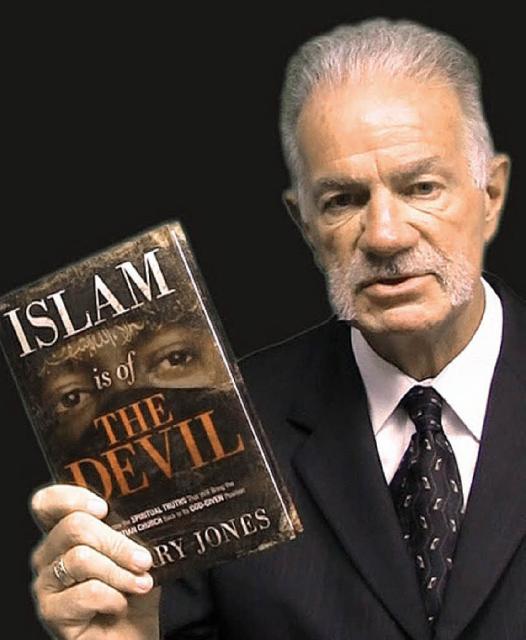
The break with Cologne brought Jones back to Florida, where he became the public face of the Dove World Outreach Center in Gainesville. It was a small, independent Christian congregation, but Jones had a knack for turning its message into a national story. In 2009, the church displayed a sign reading “Islam Is of the Devil,” and members wore the slogan on T-shirts. The campaign drew condemnation and made clear that Jones intended to frame his ministry around confrontation with Islam.
The Qur’an Burning That Made Him Famous
Jones’s biggest burst of attention came in 2010, when he announced plans to burn copies of the Qur’an on the ninth anniversary of the September 11 attacks. The proposal triggered an international backlash. Religious leaders, public officials, and military commanders warned that the spectacle could endanger American troops and inflame violence abroad. After announcing that he would cancel the event, Jones reversed course in March 2011: his congregation staged a mock trial of the Qur’an and burned a copy. The episode was followed by deadly protests in Afghanistan, including an attack on a United Nations compound.
Rather than retreat from the spotlight, Jones continued to stage provocative events and amplify his views through public appearances and online media. He promoted the anti-Islam film Innocence of Muslims in 2012, drawing renewed condemnation and a symbolic death sentence from an Egyptian court in absentia. In September 2013, police arrested him and an associate as they traveled with nearly 3,000 kerosene-soaked Qur’ans and a grill, intending to burn one for each victim of the 2001 attacks. He was charged with unlawful conveyance of fuel and unlawful open carry of a firearm.
Politics, Family, and Public Image
Jones also tried to turn notoriety into a political platform. He founded the organization Stand Up America Now and announced independent campaigns for the U.S. presidency in 2012 and 2016. His stated platform included immigration restrictions, a reduced American military presence overseas, and lower bureaucracy and corporate taxes. His later ventures included a furniture and moving business and, briefly, a food stand in Florida.
His personal life has intersected with the ministry he built. His first wife, Lisa, died in 1996. He later married Sylvia Jones, who joined him in business and ministry. His daughter from his first marriage publicly distanced herself from his beliefs and practices.
Few pastors have had a local congregation thrust so abruptly onto the world stage. Jones’s supporters have cast him as a free-speech activist willing to court outrage; critics have seen his stunts as deliberate anti-Muslim provocation, with consequences far beyond his church. The planned burning that he canceled, the copy his congregation later burned, and the protests that followed became inseparable from his public identity. His career remains a stark example of how a marginal religious movement can use spectacle to command global attention—and how that attention can carry serious consequences.