Theodor Georg Karajan
 Austria
- Early Life and Education
- Academic Career
- Historical Studies and Works
- Political Involvement
- Legacy and Impact
Early Life and Education
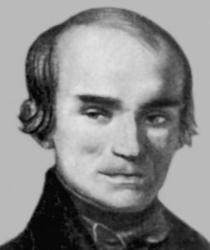
Theodor Karl Georg von Karajan was an Austrian philologist, historian, and politician. Born in Vienna to a Greek family, he earned a doctorate in philosophy. In 1850, Karajan became a professor of German language and literature at the University of Vienna, but his tenure was cut short in 1851 due to a prohibition on non-Catholics holding positions there.
Academic Career
Despite this setback, Karajan made significant contributions to German philology. In 1851, he was elected vice-president of the Vienna Academy of Sciences, and in 1866, he became its president. His publications on ancient German literature included "Frühlingsgabe für Freunde älterer Litteratur" (1839), "Michael Behaims Buch von den Wienern, 1462-1465" (1843), and "Deutsche Sprachdenkmale d. XII Jahrhunderts" (1846). He also wrote historical notes for Lachmann's edition of Ulrich von Lichtenstein's poetry (1841).
Historical Studies and Works
Karajan's literary-historical monographs included "Ueber Heinrich den Teichner" (1855) and "Abraham a Sancta Clara" (1867). He also published an unfinished "Mittelhochdeutsche Grammatik" (1855). Additionally, Karajan edited exemplary works such as "Verbrüderungsbuch des Stiftes St. Peter zu Salzburg" (1852) and "Die alte Kaiserburg zu Wien vor 1500" (1863). In "Fontes rerum austriacarum," he published "Kleine Quellen zur Geschichte Oesterreichs" (1855).
Political Involvement
In addition to his academic pursuits, Karajan entered the political arena. In 1869, he was awarded the title of Ritter (knight). He served as a member of the Austrian parliament and as a member of the Committee of the National Library.
Legacy and Impact
Theodor Karl Georg von Karajan's contributions to German philology and Austrian history were immense. His works on ancient German literature and his historical monographs laid the groundwork for future research. His influence on the academic and political spheres of Austria left a lasting legacy that continues to be felt today.