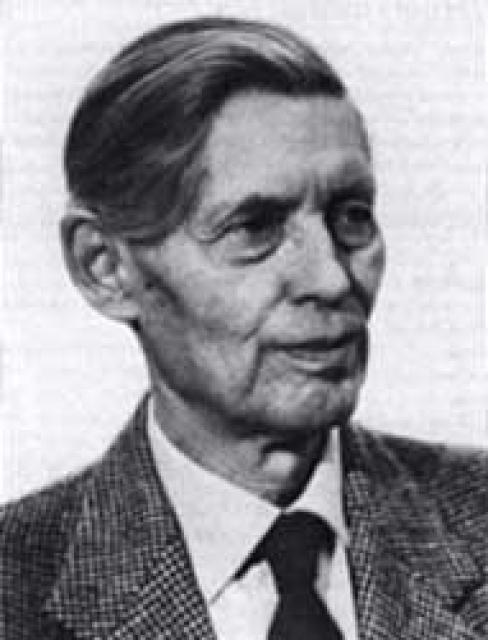
Theodor Svedberg
 Sweden
Biography of Theodor Svedberg
Theodor Svedberg was a Swedish physicist and chemist who was awarded the Nobel Prize in Chemistry in 1926. He was born near Evle, Sweden, the only child of Elias Svedberg, a manager at an iron foundry, and Augusta Alstermark. Svedberg developed an interest in physics, chemistry, and biology while attending the Karolin School in Orebro. Although he was more interested in botany, he decided to become a chemist in order to gain a deeper understanding of biological processes.
In January 1904, Svedberg enrolled at Uppsala University and obtained his bachelor's degree in September 1905. That same year, he published his first scientific article. Svedberg continued his studies at Uppsala University and in 1907, he received his doctoral degree for his dissertation on colloid systems. In his dissertation, he described a new method of using oscillating electric discharges between metal electrodes immersed in a liquid to produce colloidal solutions of metals. He experimentally confirmed Einstein and Smoluchowski's theory of Brownian motion in 1907, proving the existence of molecules, and made contributions to modern understanding of the atomic-molecular structure of matter.
In 1912, Svedberg became the first professor of physical chemistry at Uppsala University and held this position for 36 years. He gained recognition for his research on the physical properties of colloidal systems. The size of large colloidal particles could be determined by measuring their sedimentation rates, as demonstrated by Jean Baptiste Perrin (Nobel Prize in Physics, 1926). However, the majority of colloidal particles sedimented slowly, making this method impractical. Svedberg recognized the need to accelerate the process and developed a more advanced method, leading to the creation of the ultracentrifuge.
Svedberg believed that the sedimentation of colloidal particles could be accelerated under stronger gravitational fields created by high-speed centrifugation. During an eight-month internship at the University of Wisconsin in 1923, he began the development of an optical centrifuge that recorded the sedimentation of particles through photography. Although the particles moved not only by sedimentation but also due to convective currents, Svedberg was unable to determine their sizes. To eliminate temperature fluctuations and convection currents, he designed a wedge-shaped cell and rotated it in a hydrogen atmosphere, achieving sedimentation without convection in 1924. A year later, Svedberg discovered that proteins could also be made to sediment from solution. He demonstrated that all molecules of a given protein were monodisperse, unlike the polydisperse colloidal particles of inorganic systems. Moreover, the sedimentation rate of a protein could provide information about its molecular size.
In 1926, Svedberg was awarded the Nobel Prize in Chemistry for his work on dispersed systems. After receiving the Nobel Prize, the Swedish government built a new laboratory of physical chemistry specifically for Svedberg, where he spent another 15 years perfecting the design of the centrifuge. In January 1926, he tested a new model with oil rotors and achieved a speed of 40,100 revolutions per minute. Five years later, he created a new model that reached 56,000 revolutions per minute. Through a series of rotor design improvements, by 1936, the centrifuge could reach speeds of 120,000 revolutions per minute, subjecting the sedimenting system to a gravitational force of 525,000 times the force of gravity.
The next stage of Svedberg's research involved analyzing the sedimentation characteristics of 100 proteins involved in the respiratory processes of various animals, including hemoglobin and hemocyanin. He demonstrated that the molecules of all these proteins were spherical, monodisperse, and had large molecular masses. Expanding his research to other biopolymers, Svedberg discovered that carbohydrates such as cellulose and starch formed long and thin polydisperse molecules. Thanks to Svedberg's discoveries, the ultracentrifuge became the key instrument for biochemical analytical research, and the sedimentation rate of biopolymers is measured in "Svedberg units."
Svedberg's research, along with Arne Tiselius' work on electrophoresis (Nobel Prize in Chemistry, 1948), played a crucial role in establishing the uniqueness of protein molecules based on size and structure, which paved the way for Frederick Sanger's determination of their amino acid sequences (Nobel Prize in Chemistry, 1958 and 1980) and the crystallographic work of Kendrew and Perutz (Nobel Prize in Chemistry, 1962).
Svedberg was also interested in radioactivity and conducted joint research with Daniel Stromholm, demonstrating that certain radioactive elements were chemically indistinguishable from each other and occupied the same position in the Periodic Table. This discovery anticipated Frederick Soddy's investigation of isotopes (Nobel Prize in Chemistry, 1921). In the late 1920s, Svedberg studied the effects of alpha particles emitted by radioactive substances on protein solutions. After James Chadwick's discovery of the neutron in 1932, Svedberg constructed a small neutron generator to study neutron irradiation and obtain radioactive isotopes as chemical and biological indicators.
In 1949, Svedberg retired, but he was allowed to retain his position as the director of the Gustav Werner Institute of Nuclear Chemistry, which was established at Uppsala University shortly before his retirement. The institute became known for its synchrocyclotron, mainly thanks to Svedberg's efforts.
Svedberg made significant contributions to bridging the gap between academic science and the practical application of scientific advancements. During World War II, he facilitated the production of synthetic rubber in Sweden. He believed that science was international and invited foreign scientists to work at Uppsala University.
Svedberg was a man of great intelligence and diverse interests. He was an excellent amateur photographer and conducted serious studies on the process of photography. In the 1920s, using various wavelengths while photographing the "Codex Argenteus" (Gothic Bible, 500 AD), he discovered that ultraviolet rays made visible the poorly distinguishable composition in which it was written.
He also had an interest in botany and possessed one of the best botanical collections in Sweden.
Some of Svedberg's notable works include "Degeneration of Energy," "Formation of Colloids," "Colloid Chemistry," and "The Ultracentrifuge" (co-authored with K.O. Pedersen).
Theodor Svedberg passed away on February 25, 1971, leaving behind a lasting legacy in the fields of physical chemistry, colloid science, and biochemistry.


