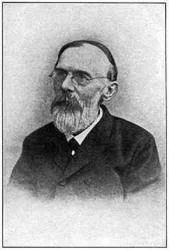
Theodore Saidenberg
Theodore Saidenberg made the piano a meeting place for some of the twentieth century’s most celebrated classical musicians. A pianist trained at Philadelphia’s Curtis Institute, he built a long career as a chamber partner and accompanist, where listening closely and shaping the music around a soloist were as essential as technical command.
Training in Philadelphia
Saidenberg was born in Baltimore, Maryland, on March 8, 1908. He studied at the Curtis Institute of Music, where he trained in piano and accompaniment with Harry Kaufman. Curtis’s archives place him among Kaufman’s students in the late 1920s, when the young pianist was already performing in student concerts. In early reviews, his playing was noted for its artistry and sensitivity in support of singers and instrumentalists.
Rather than build his identity around solo recitals alone, Saidenberg became a sought-after collaborative pianist. The role demanded more than keeping time: a strong accompanist had to anticipate a partner’s phrasing, balance the piano against another instrument or voice, and help a performance feel like a conversation. Saidenberg’s fluency in that work made him a welcome partner on the concert stage and in the studio.
A trusted partner on stage and screen
Over the years, Saidenberg performed with an extraordinary range of artists, including violinists Jascha Heifetz, Efrem Zimbalist, Erica Morini and Isaac Stern; cellist Emanuel Feuermann; singers Lily Pons and Richard Tucker; and violist Mischa Mischakoff. He also appeared with Louis Kaufman, Rose Bampton, Raya Garbousova and Helen Jepson. The breadth of these partnerships reflects the confidence musicians placed in a pianist who could follow their individuality while giving the music a firm, responsive foundation.
His work reached beyond live concerts. Saidenberg played on radio broadcasts, made recordings and contributed to motion-picture music. In the 1939 film They Shall Have Music, he appeared as Heifetz’s accompanist, bringing his concert partnership into a popular Hollywood setting. He also collaborated with pianist Wolfgang Edward Rebner on radio, including a two-piano arrangement of Bach’s Jesu, Joy of Man’s Desiring.
A career built on collaboration
Saidenberg’s life in music illustrates how much of classical performance depends on partnership. The accompanist may sit just behind the soloist in the spotlight, but the piano shapes the atmosphere, pace and emotional contour of a performance. His work alongside leading instrumentalists and singers gave him a distinctive place in American musical life: not simply a reliable supporter, but an artist whose alertness and musicianship helped others shine.
He died in Hollywood, Florida, in August 1986. The recordings and concert histories left by Saidenberg preserve the work of a pianist whose craft was grounded in attentiveness, versatility and an unusually wide circle of musical collaborators.