Therese Schlesinger-Eckstein
 Austria
- Early Life and Education
- Feminist Activism and Writing
- Socialist Involvement
- Political Career
- Personal Life
- Exile and Death
- Legacy
Early Life and Education
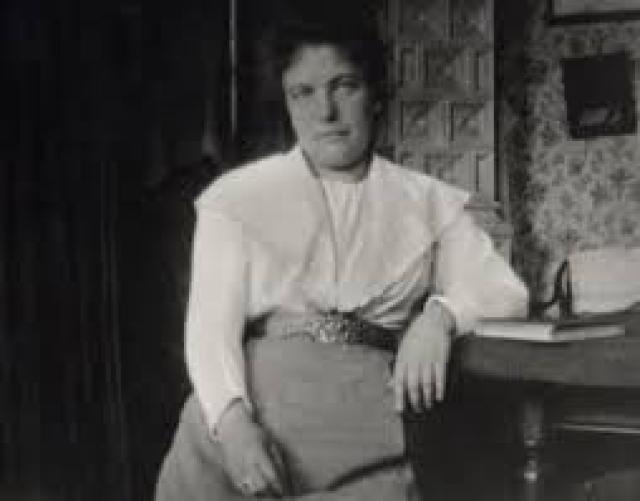
Therese Schlesinger, née Exstein, was born on June 6, 1863, in Vienna, Austria. Growing up in a liberal Jewish family of industrialists, she was raised alongside her siblings Emma, Friedrich, and Gustav. Despite not receiving a formal higher education, Schlesinger pursued extensive self-education and private lessons.
Feminist Activism and Writing
In 1894, Schlesinger joined the Allgemeiner Österreichischer Frauenverein (AÖFV), a women's association, through her friend Marie Lang. Inspired by Augusta Fickert, she began writing articles for newspapers and magazines. She also became vice-president of the AÖFV and advocated for women's rights, including access to higher education and voting rights.
Socialist Involvement
In 1896, Schlesinger attended the conference of the Ethischen Gesellschaft Wien on the conditions of Viennese workers. There, she established connections with social democrats. She subsequently studied social democratic theory and attended lectures on social ethics at the University of Vienna. In the autumn of 1897, she joined the Austrian Social Democratic Labor Party.
In 1901, Schlesinger co-founded the Verein Sozialdemokratischer Frauen und Mädchen and wrote extensively on women's issues. She contributed to social democratic publications such as "Der Kampf," "Arbeiter-Zeitung," and "Die Unzufriedene."
Political Career
After the introduction of universal suffrage for women in 1918, Schlesinger and Adelheid Popp launched the weekly newspaper "Die Wählerin." She became one of the first women to be elected to the Constituent National Assembly (Konstituierende Nationalversammlung) as a Social Democrat. Schlesinger served in the National Council of Austria from 1919 to 1923 and the Federal Council until 1930.
Personal Life
In 1888, Schlesinger married Victor Schlesinger, a banker. They had a daughter, Anna, in 1890. However, Schlesinger's postpartum illness left her wheelchair bound. Her husband died of tuberculosis in 1891, and her daughter committed suicide in 1920.
Exile and Death
In 1933, Schlesinger resigned from her party leadership, which was later outlawed in 1934. After the Anschluss of Austria in 1938, she fled to France due to her Jewish heritage. She spent the remainder of her life in a sanatorium in Blois, where she passed away on June 5, 1940.
Legacy
In 1949, a residential complex in Vienna's Josefstadt district was named the "Therese-Schlesinger-Hof." In 2006, a square in Vienna was also named Schlesingerplatz in her honor.