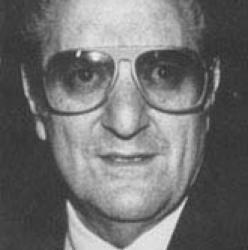
Thierry Tilly
Thierry Tilly became known internationally as the central figure in the “Monflanquin recluses” case, a long-running fraud and coercive-control scandal in southwestern France. Courts found that he manipulated 11 members of the de Védrines family, isolated them from outsiders, and helped strip them of an estimated €4.5 million in property and money. The family’s ordeal lasted nearly a decade and ended in his arrest in Switzerland and a final 10-year prison sentence in France.
From Business Contact to Family Confidant
Public records and reporting offer few reliable details about Tilly’s early life. By the late 1990s, he was running an industrial cleaning company. In 1997, he met Ghislaine de Védrines, who directed a Paris secretarial school. Tilly’s company provided services to the school, and he gradually became involved in its affairs and gained the family’s trust.
In 2000, Ghislaine invited him to the family’s ancestral Château Martel in Monflanquin, in the Lot-et-Garonne region. There he met more of the de Védrines family, who belonged to a prominent Protestant family with a substantial estate. Tilly presented himself as unusually well connected and, according to accounts aired during the case, at various times claimed to be an intelligence agent or a member of the British royal family.
The Monflanquin Case
Beginning in 2001, Tilly persuaded family members that they were in danger from a secret conspiracy and that he alone could protect them. Over time, 11 relatives across three generations withdrew from ordinary life. They lived behind the walls of Château Martel, moved to another secured property in the region, and eventually relocated to Oxford, England. They cut off contact with relatives and friends, while family assets were sold or transferred. The total loss was estimated at about €4.5 million.
The isolation began to unravel in 2009, when Christine de Védrines managed to leave Oxford and contact authorities in France. A European arrest warrant led to Tilly’s arrest in Zurich, Switzerland, on October 21, 2009. He was returned to France to face charges arising from the family’s confinement and financial losses.
At his 2012 trial in Bordeaux, the court convicted Tilly of offences including abuse of weakness, aggravated violence, and unlawful arrest or detention. He received eight years in prison. On appeal in June 2013, the Bordeaux court increased the sentence to 10 years and upheld a five-year loss of civil and civic rights. France’s Court of Cassation rejected his final appeal in February 2016, making the conviction definitive.
Release and Public Legacy
Tilly had been detained since 2009 and was released in July 2017 after serving nearly nine years. French media later reported that he was briefly placed in a psychiatric hospital after his release and subsequently left the facility. His case continued to attract attention through books, radio documentaries, and television programs about the de Védrines family’s experience.
The Monflanquin case became a prominent French example in debates about psychological coercion and the legal concept of “abuse of weakness.” Its significance lies in how the courts assessed prolonged isolation, dependency, and the exploitation of trust when determining criminal responsibility. The de Védrines family’s return to ordinary life was gradual, and civil disputes over the estate continued even after the criminal proceedings against Tilly had concluded.