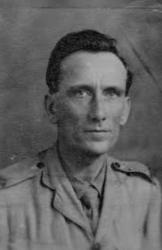
Thomas Amory
 Great Britain
Thomas Emory: A Biographical Sketch
Thomas Emory was an English poet, clergyman, and dissenter educator. Unlike many contemporary clergy who aimed to captivate their congregations with their oratorical skills, Emory delivered his sermons in a dry and methodical manner. However, he commanded considerable authority and respect within certain circles.
Emory's father owned a grocery store, while his mother was the sister of the renowned clergyman and theologian Henry Grove. He studied under the local dissenter minister Chadwick for a period of time and learned French in Exeter under the guidance of another religious dissenter, André de Majendie. In March 1717, Emory entered Tonton Academy to study theology. The academy was a stronghold of Western Dissent at that time and had esteemed tutors such as Stephen James from Fullwood and Henry Grove, who Emory was already familiar with. Emory's uncle taught philosophy at the academy, while Stephen James instructed the students in theology. In 1722, Emory successfully completed his studies and moved to London to pursue experimental physics. John Eames from Moorfields assisted him in his physics studies.
After Stephen James' death and prior to his own ordination, Emory worked as an assistant clergyman under Robert Darch in Hull Bishops. He also worked for a period of time at his alma mater, Tonton Academy. On October 3, 1730, Emory was ordained as a clergyman and began working with Edmund Batson at Paul's Meeting in Taunton. Unfortunately, Emory was unable to establish a friendship with Batson, as he was more conservative in his theology and unwilling to share his income. The conflict was resolved in 1732 when Emory's friends separated from Batson's congregation and built a new meeting house for their mentor on Tankred Street.
In 1738, after the death of Henry Grove, Emory became the head of Tonton Academy. In 1741, Emory married Mary, the daughter of Reverend Baker from Southwark. They had five children, four of whom outlived their father. In October 1759, Emory relocated to London and began delivering evening sermons in one of the city's prayer houses. In 1766, he inherited the position of pastor in a local congregation and worked alongside Nathaniel White.
In 1768, Emory obtained a Doctor of Theology degree and continued to deliver sermons. However, he never achieved the same popularity he enjoyed in Tonton. The main issue was the style of Emory's sermons; he leaned more towards the teachings of Samuel Clarke and was not conservative enough for the capital. Although his sermons were dry and somewhat tedious, they were substantial. Nevertheless, Emory played a significant role among liberal dissenters. In 1772, he actively campaigned against the compulsory subscription to the doctrines of the official church, a requirement for all clergymen until 1779. Emory himself never subscribed to these doctrines and opposed those who believed that the new declaration, although less aggressively imposed, was a lesser evil. Unfortunately, Emory did not live to see the end of these doctrines. He passed away on June 24, 1774.