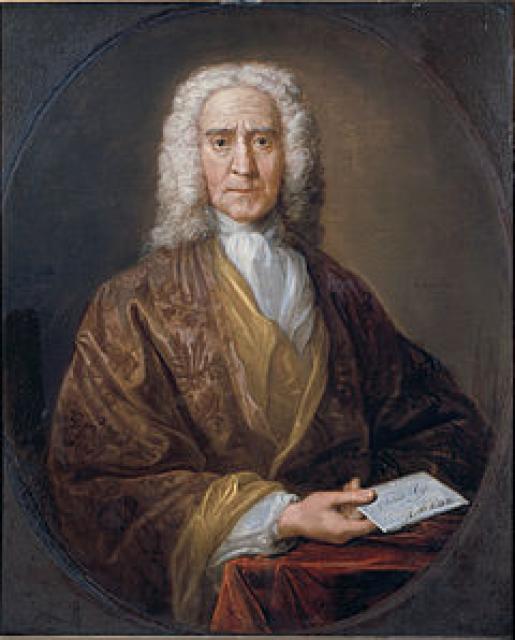
Thomas Hope
 Netherlands
Biography of Thomas Hope
Thomas Hope was a Dutch banker and trader who managed the Dutch West India Company and the Dutch East India Company. The history of numerous European merchant and trading enterprises is an important part of Europe's history as a whole; rulers and entire empires often owed a great deal to ordinary merchants. The company 'Hope&Co' is one of the brightest examples of such trading enterprises, and one of its leaders was the Dutch banker and trader Thomas Hope.
Early Life and Family
Thomas Hope's family tree has its roots in Scotland, not in the Netherlands. His father, Archibald, was once a Quaker. Together with his eldest of eight sons, Archibald Jr., the elder Hope became one of the key players in the Rotterdam trading scene. Archibald's second son, Henry, went to seek fortune in the United States, while the two younger children, Zacharia and Isaac, stayed in Rotterdam and engaged in the shipbuilding business. Archibald and Thomas, however, settled in Amsterdam.
Business Ventures
After the economic bubble burst in 1720, Archibald Jr. established the trading and banking firm 'Hope&Co', which was intended to be a branch of the family banking house. Archibald would stay with his cousin, disappearing at the Amsterdam Stock Exchange for days on end. It seemed that he was doing well, and in 1724, Thomas also joined the family business. After Archibald's death in 1734, Thomas continued to run the company with his younger brother Adrian. The business gradually grew and expanded, with the company conducting trade across Europe and beyond. In addition, the company traded with America and even supplied slaves to the West Indies. Eventually, William IV and William V appointed Thomas Hope as their official representative in the Dutch West India Company and the Dutch East India Company.
Accomplishments
Thomas Hope conducted trade quite successfully, but his list of achievements did not end there. He is believed to be the possible author of the "Proposal" put forward in 1751 in the Dutch Parliament, aimed at improving the country's position in international markets by abolishing export taxes and reducing import taxes.
Later Life and Legacy
The business of the Hope brothers continued to thrive for a long time, and during that period, many merchants had nothing to complain about in life. The Hope family benefited from several factors, such as earning a substantial profit from loans issued during the Anglo-French War. In 1758, Thomas purchased a house on Keizersgracht, previously owned by the Dutch ambassador to France, Mattheus Lestevenon. By 1759, the Hope enterprise employed a total of 26 people, and in 1763, the company even bought a neighboring house, giving it to Thomas' American nephew, Thomas Henry Hope. Thomas had one son, Jan Hope, who traveled the world with his cousin Henry. The new generation of Hopes continued to develop the family business and maintained the reputation of the family. Of course, the firm also faced difficult times, such as when many Amsterdam businesses suffered in 1763 when the De Neufville Brothers firm failed to repay numerous loans. However, 'Hope&Co' managed to overcome these challenges as well.
Thomas Hope passed away on December 26, 1772, at the age of 75 (or according to other sources, 74).