Thomas Newman
 USA
USA- Biography of Thomas Newman
- Breakthrough and Success
- Other Achievements and Musical Style
- Influence and Versatility
Biography of Thomas Newman
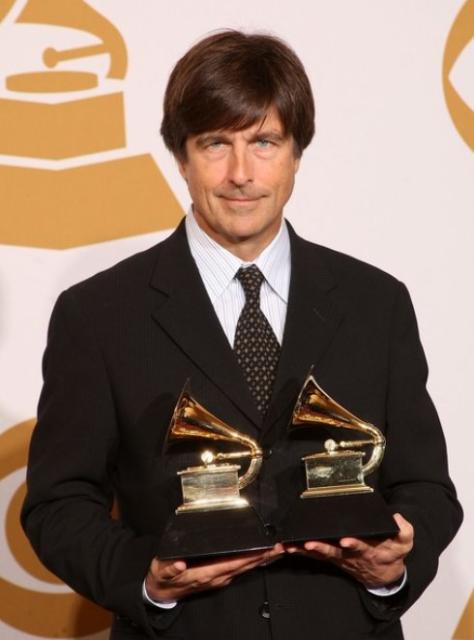
Thomas Montgomery Newman, an American composer and Academy Award nominee, was born on October 20, 1955, in Los Angeles, California, USA. He comes from a Hollywood dynasty of film composers, including his father, the legendary Alfred Newman, his uncle Lionel Newman, his brother David Newman, and his cousins Joey and Randy Newman (who gained fame as performers and songwriters). Thomas received his education at Yale University and began his career as a film composer in 1984 with the movie "Reckless".

Breakthrough and Success
Newman's breakthrough came in 1994 when he was nominated for an Academy Award for his musical achievements in the films "Little Women" and "The Shawshank Redemption". He was the only candidate that year to receive two nominations. Critically acclaimed and embraced by the commercial world, Thomas has composed music for numerous films, including the award-winning "American Beauty" (he received an Emmy Award for "Best Soundtrack Album for a Film, Television or Other Visual Media"), "The Player", "Finding Nemo", "Lemony Snicket's A Series of Unfortunate Events", "Pay It Forward", "The Good German", and "WALL-E". He has also composed music for television, including the theme for the series "Boston Public" and the miniseries "Angels in America". His theme for the TV show "Six Feet Under" won two Grammy Awards in 2003 for "Best Instrumental Composition" and "Best Instrumental Arrangement".

Other Achievements and Musical Style
Newman was appointed to oversee the 'Reach Forth Our Hands' orchestra for Cleveland's bicentennial celebration in 1996. At the 79th Academy Awards ceremony, he appeared in the opening musical segment by Errol Morris. Newman has been a nominee of the Academy seven times, but has never won, so this year promises to be his eighth chance. In the 1980s, his work was characterized by electronic sounds. Starting with the movie "The Rapture" in 1991, his music alternated between more traditional orchestral sound and passages that used the "shifting array" technique with non-traditional and modified instruments, such as processed banjo, detuned mandolin, tabla, zafu (pocket saxophone), and others, as well as electronic elements to create a percussive, gamelan-like sound. Chess Smith and Rick Cox are the people Thomas Newman often collaborates with when using this unconventional style.
Influence and Versatility
Newman has claimed that composer Stephen Sondheim was his most important mentor. Sondheim defended one of Newman's earliest works, the music for the theatrical production of "Three Mean Fairy Tales". Since the 1980s, Newman has preferred working in film and television, with notable projects including "Desperately Seeking Susan", "Welcome Home, Roxy Carmichael", "Fried Green Tomatoes", "Scent of a Woman", "Phenomenon", "The People vs. Larry Flynt", and "The Horse Whisperer". In the new century, Thomas has composed music for films such as "White Oleander", "The Patriot", "Cinderella Man", "Jarhead", "Little Children", "The Visitor", "Revolutionary Road", and the miniseries "Angels in America". Adding musical accompaniment to the world of cinema, Thomas Newman effortlessly transitions from drama to biting satire, earning him a reputation as one of Hollywood's most versatile composers to this day.