Tomas Transtromer
 Sweden
- Biography of Tomas Tranströmer
- Early Life and Education
- Career and Recognition
- Style and Themes
- Later Life and Legacy
Biography of Tomas Tranströmer
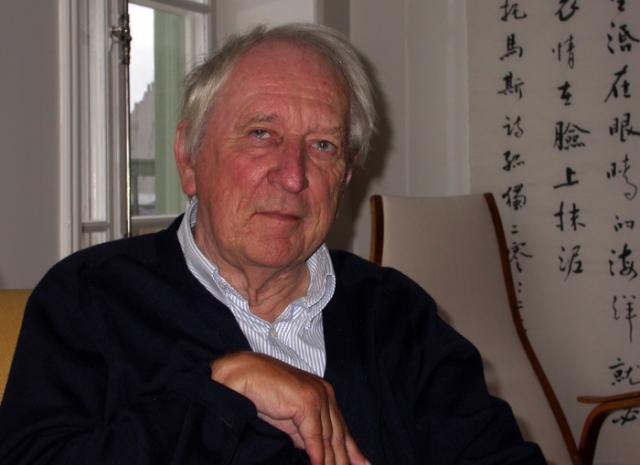
Tomas Tranströmer was a Swedish poet, psychologist, and translator. He was born on April 15, 1931 in Stockholm. Tranströmer is considered one of the greatest Scandinavian poets and prose writers since World War II. His poetry is highly regarded for its accessibility, even in translation. Throughout his career, he published 15 collections of poetry, which have been translated into more than 60 languages worldwide. In 1993, the poet published a short autobiography called "Minnena ser mig" (Memories Look at Me).

Early Life and Education
Tranströmer's mother was a school teacher who raised him alone after divorcing his father. He attended Södra Latins gymnasium, a prestigious school in Stockholm, where many notable graduates have studied. It was during his school years that he began writing poetry. In addition to his selected journal publications, his first collection of poems, "17 Poems," was published in 1954. He went on to study at Stockholm University, graduating in 1956 with a degree in psychology, as well as taking additional courses in history, religion, and literature.
Career and Recognition
From 1960 to 1966, Tranströmer divided his time between working as a psychologist in a correctional facility for juvenile offenders and pursuing his poetry. In the mid-60s, he became close friends with American poet Robert Bly. They regularly corresponded, and Bly began translating Tranströmer's poems into English and helped organize poetry readings for the Swedish author when he visited America. Tranströmer gained recognition in the Arab world through the efforts of Syrian poet Adunis (Ali Ahmad Said Esber). Several Russian poets, including Alexandra Afinogenova, Alexey Prokopyev, Tatiana Bek, Anatoly Kudryavitsky, and Ilya Kutik, have translated Tranströmer's poetry into Russian.

Style and Themes
In the 1970s, other poets accused Tranströmer of neglecting his own time by not openly addressing social and political issues in his poetry and prose. Nevertheless, his works belong to the modernist, expressionist, and surrealist poetic traditions of the 20th century and further develop them. His clear and seemingly simple sketches of everyday life and the surrounding nature reveal a mystical insight into the essence of universal aspects of the human mind. One of his poems was read at the memorial service for Swedish politician Anna Lindh, who tragically died in 2003. After the Bhopal disaster in 1984, Tranströmer traveled to India and participated in poetry readings with Indian poets.

Later Life and Legacy
In the early 1990s, Tranströmer suffered a stroke that left him partially paralyzed and speech-impaired. However, he continued to write and publish his poems until the beginning of the new century. His last work to date, "Den stora gåtan" (The Great Enigma), was published in 2004. Throughout his life, Tranströmer played the piano, and after his stroke, he learned to play with only his left hand. He often stated that music helped him continue living after the stroke. The poet's daughter became a concert singer, and in 2011, she released an album called "Dagsmeja," featuring songs based on her father's poems. Many composers and musicians have worked with Tranströmer's poems, including Torbjörn Nilsson, Maurice Karkoff, Anders Eliasson, and others. Tranströmer's literary contributions and unique perspective continue to inspire and captivate readers and artists around the world.