Erich Weinert
 Germany
- Erich Weinert: A Militant Poet and Activist
- Early Literary Career and Political Engagement
- Anti-Fascist Activism and Exile
- Propaganda and Resistance during World War II
- Return to Germany and Later Career
- Translations of Taras Shevchenko
- Legacy and Recognition
Erich Weinert: A Militant Poet and Activist
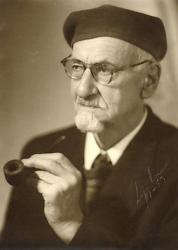
Erich Weinert was a renowned German poet and translator who played a significant role as a social activist in the German Democratic Republic (GDR). Born in 1890 to an engineer's family, he began his artistic journey in 1908 by attending a vocational school. He later studied at the School of Applied Arts in Berlin, graduating in 1912.
Early Literary Career and Political Engagement
In 1919, Weinert co-founded the "Die Kugel" artists' society. His early poems, published in the society's journal, reflected his strong political views. As a member of the Union of Proletarian-Revolutionary Writers, he became known for his political poetry, agitation, and satire. His collections "Punch and Judy Show" (1925) and "Erich Weinert Speaks" (1930) showcased his talent as a political poet.
Anti-Fascist Activism and Exile
After the Nazi takeover in 1933, Weinert faced political persecution. Forced to flee Germany, he first sought refuge in Switzerland and later in the Saarland. After the Saar plebiscite of 1935, he moved to Paris and then the Soviet Union. During the Spanish Civil War, Weinert served as a frontline correspondent for the 11th International Brigade.
Propaganda and Resistance during World War II
After Germany invaded the Soviet Union, Weinert became an anti-fascist propagandist. He broadcast to German soldiers on the radio and wrote poems that were dropped in leaflets over German-occupied territories. In 1943, he established the anti-fascist "Free Germany" committee.
Return to Germany and Later Career
After the war, Weinert returned to Germany in 1946. He received the National Prize in 1949 and 1952. He also helped found the Academy of Arts in the GDR. Weinert's anti-fascist poetry continued to be influential, especially his collection "Buoys" (1934).
Translations of Taras Shevchenko
Weinert was an accomplished translator. His German translations of Taras Shevchenko's Ukrainian poetry were widely acclaimed for their accuracy and poetic sensitivity. He translated over 68 of Shevchenko's works, including "Haydamaky" and "The Blind Woman."
Legacy and Recognition
Erich Weinert's legacy as a poet and activist remains significant. His works encompass themes of social justice, 抗击法西斯, and internationalism. He was the author of the anthem for the international brigades in Spain and penned several notable poems during the war years. Weinert's ashes lie in the columbarium of the Central Cemetery in Berlin.